
Azienda Agricola Le Valli
Saturday-night pizza.
Via Trecento 180, Lucardo – Montespertoli (FI)
Tel. 320 156 9796
By reservation
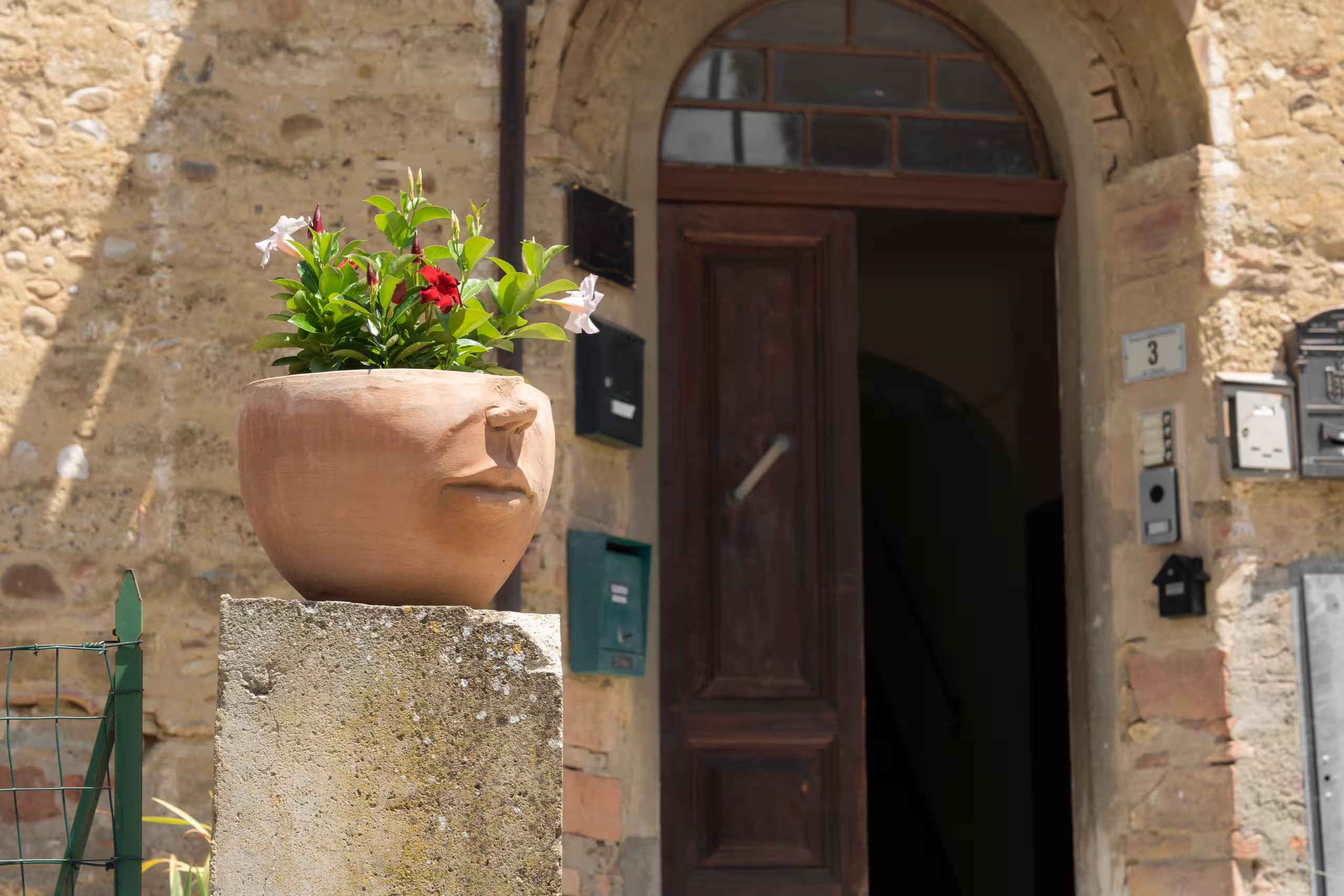
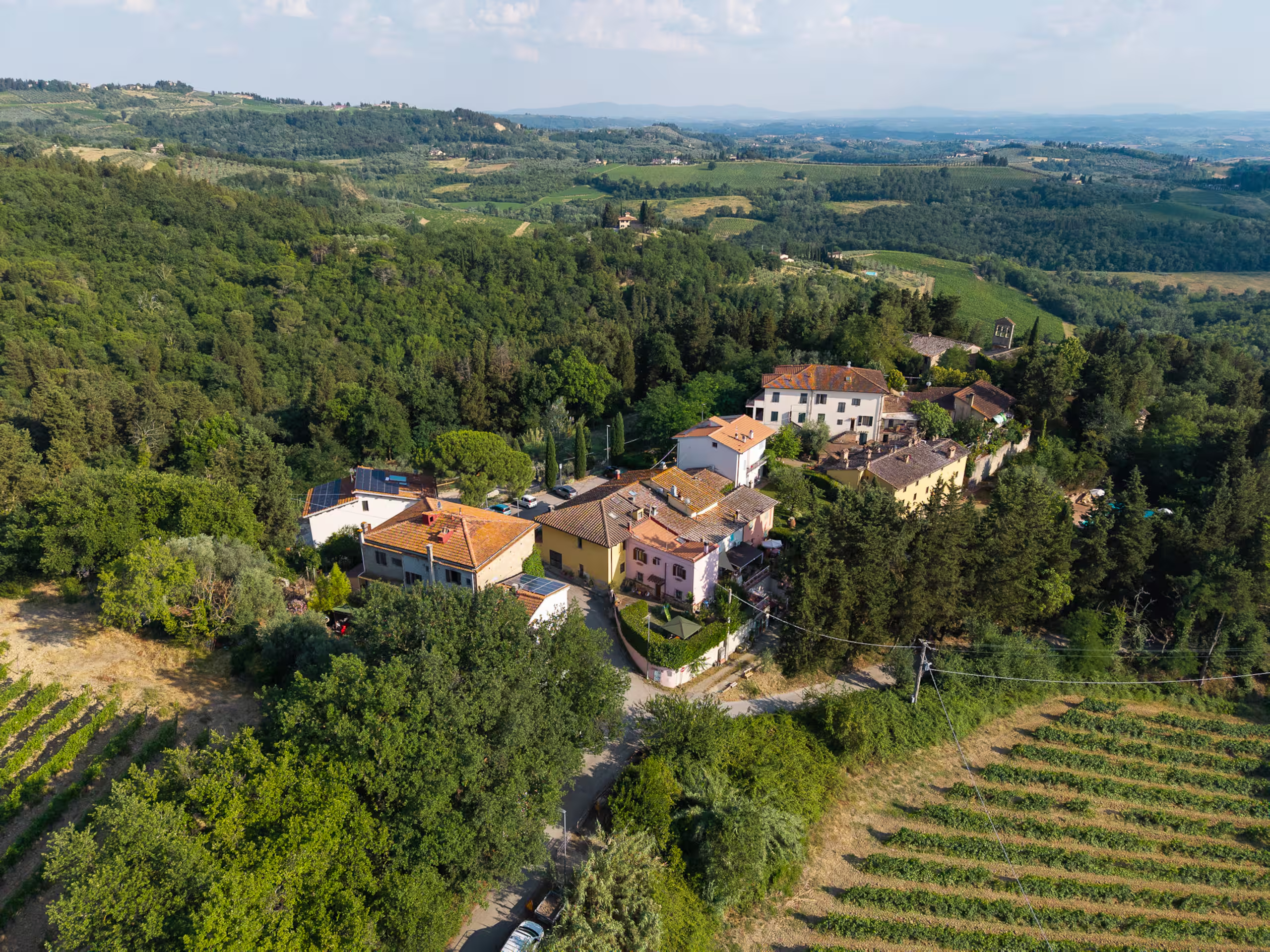
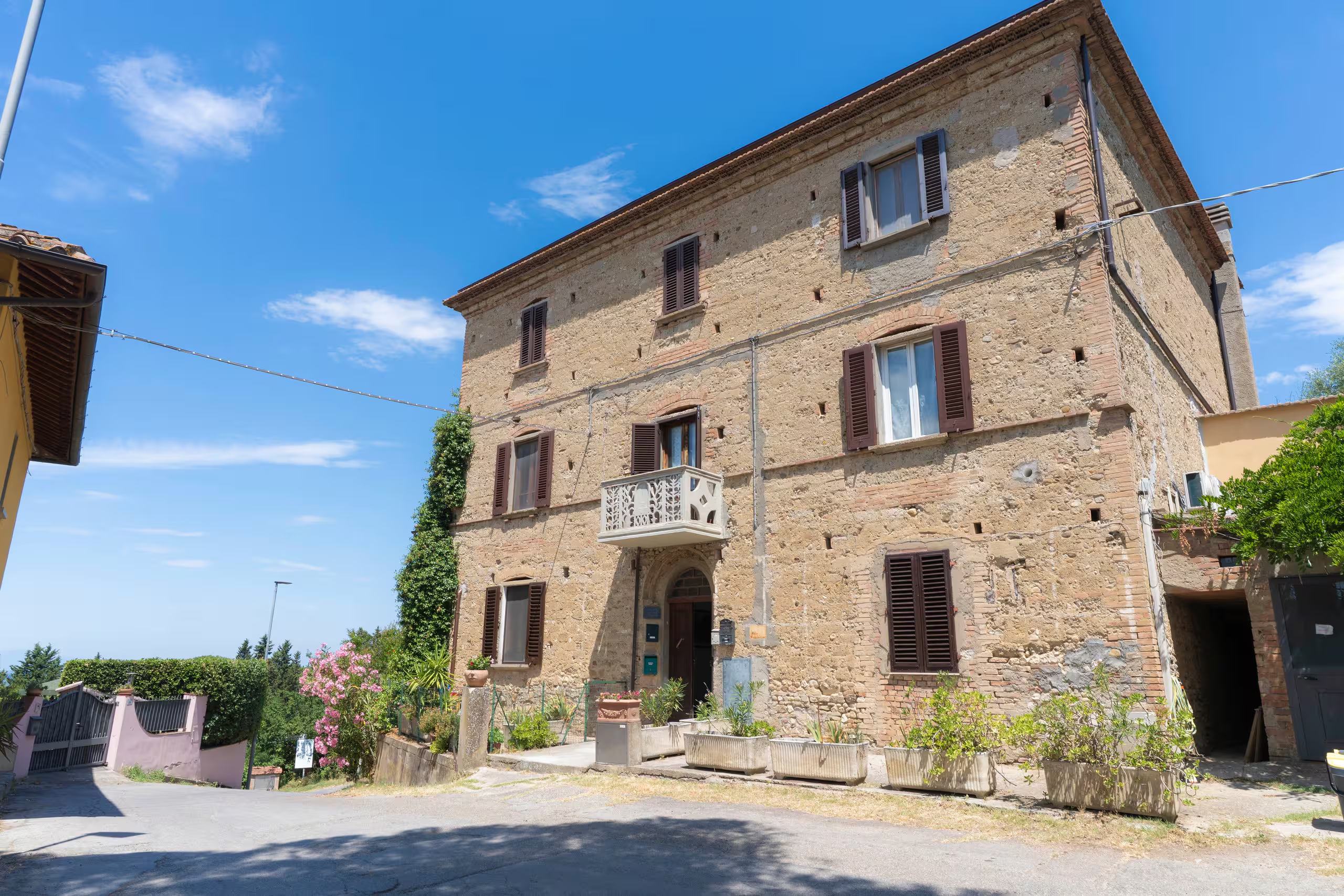
Some places don't ask to be discovered in a hurry, but invite you to stop, observe and listen.
Casa Selva is in Montalbino, a small hamlet nestled in the countryside of Montespertoli, between Florence and the hills of Chianti. A handful of houses gathered along via Trecento, surrounded by woods, olive groves, vineyards and paths crossing a landscape still deeply bound to the land.
A house designed with care and the experience of those who have lived here, to give you time to slow down and make space for your own creativity.
Casa Selva is also the starting point for the experiences with la Formicola: the walks among wild herbs and the ceramics workshops are born right here, in the land that surrounds it.
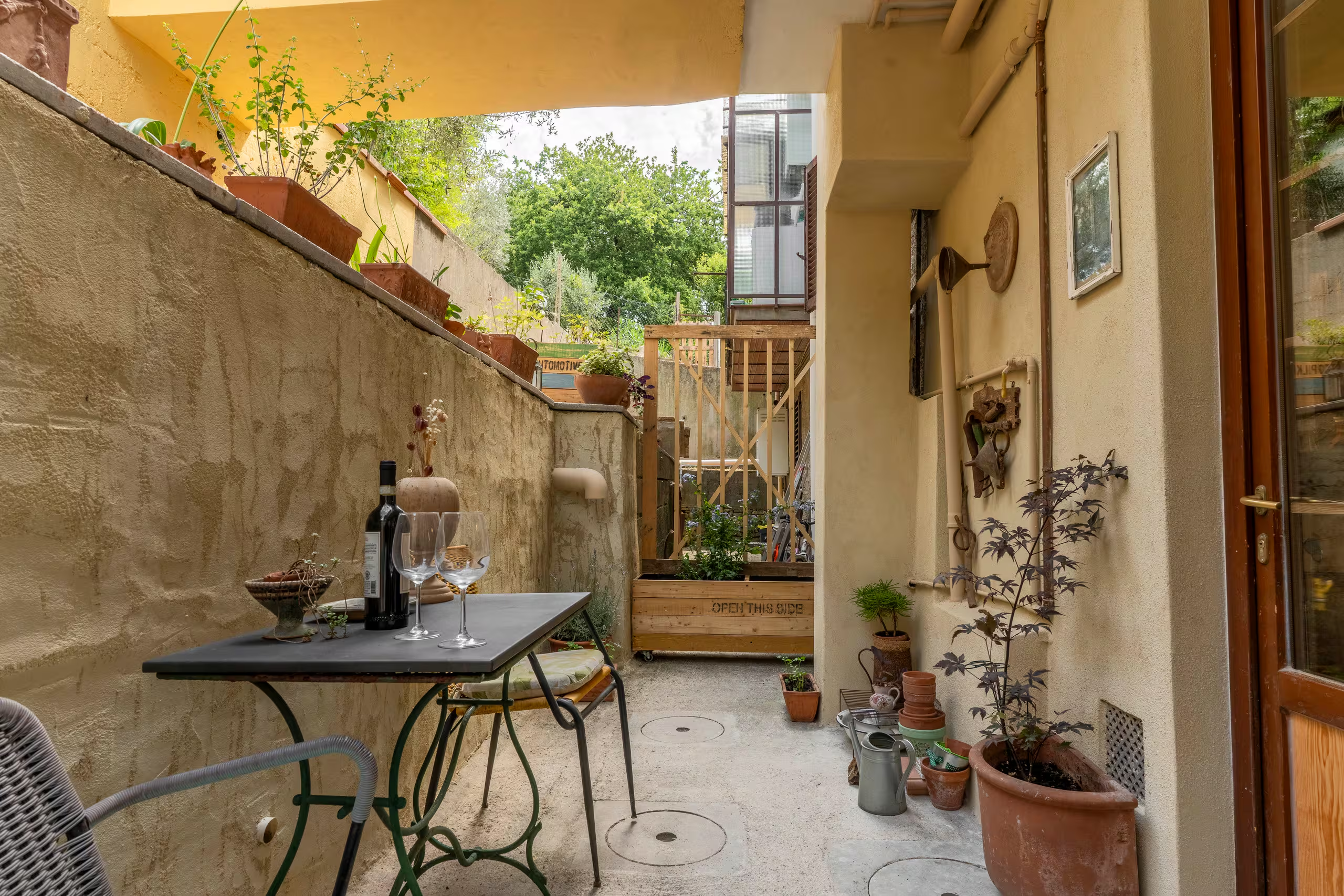
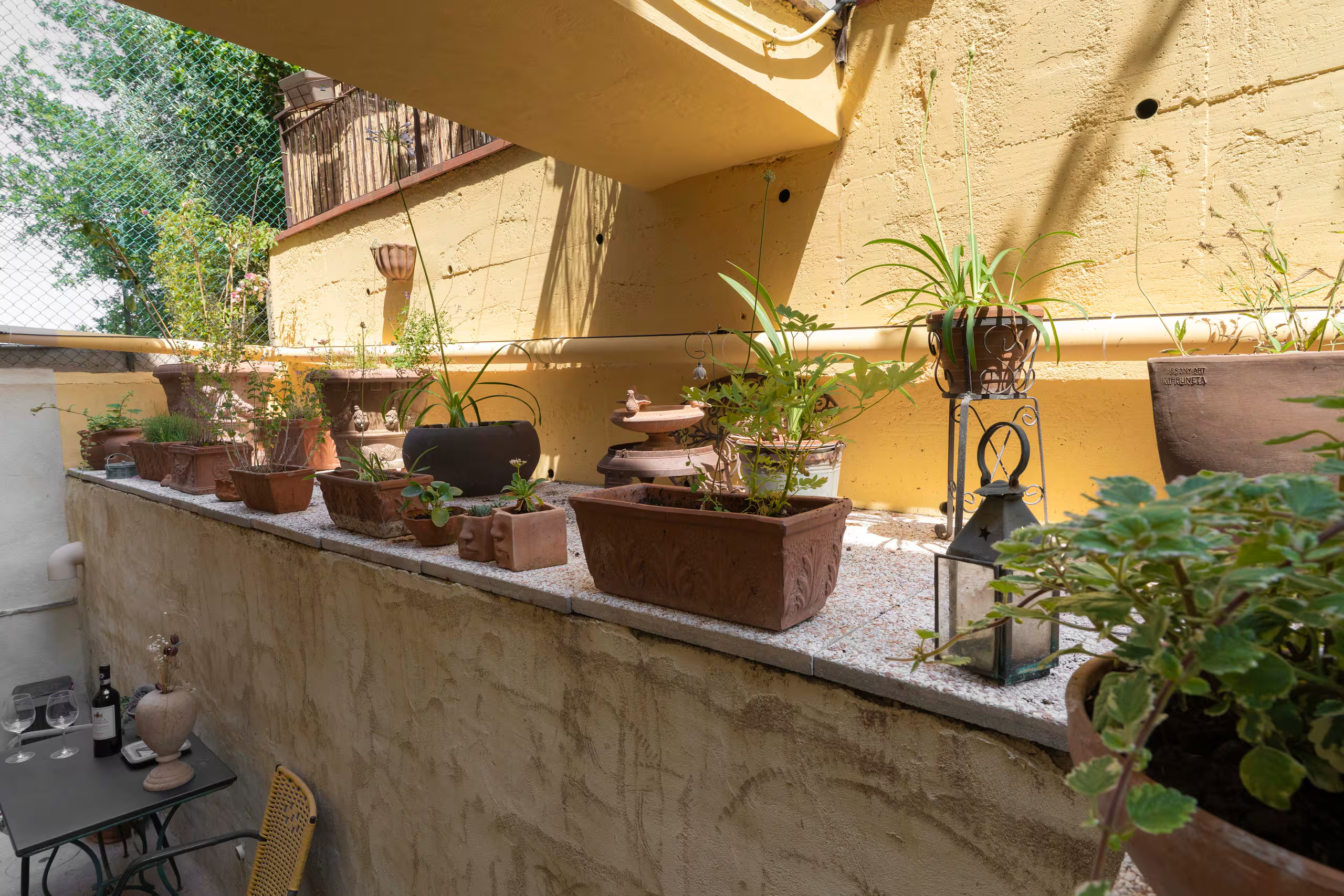
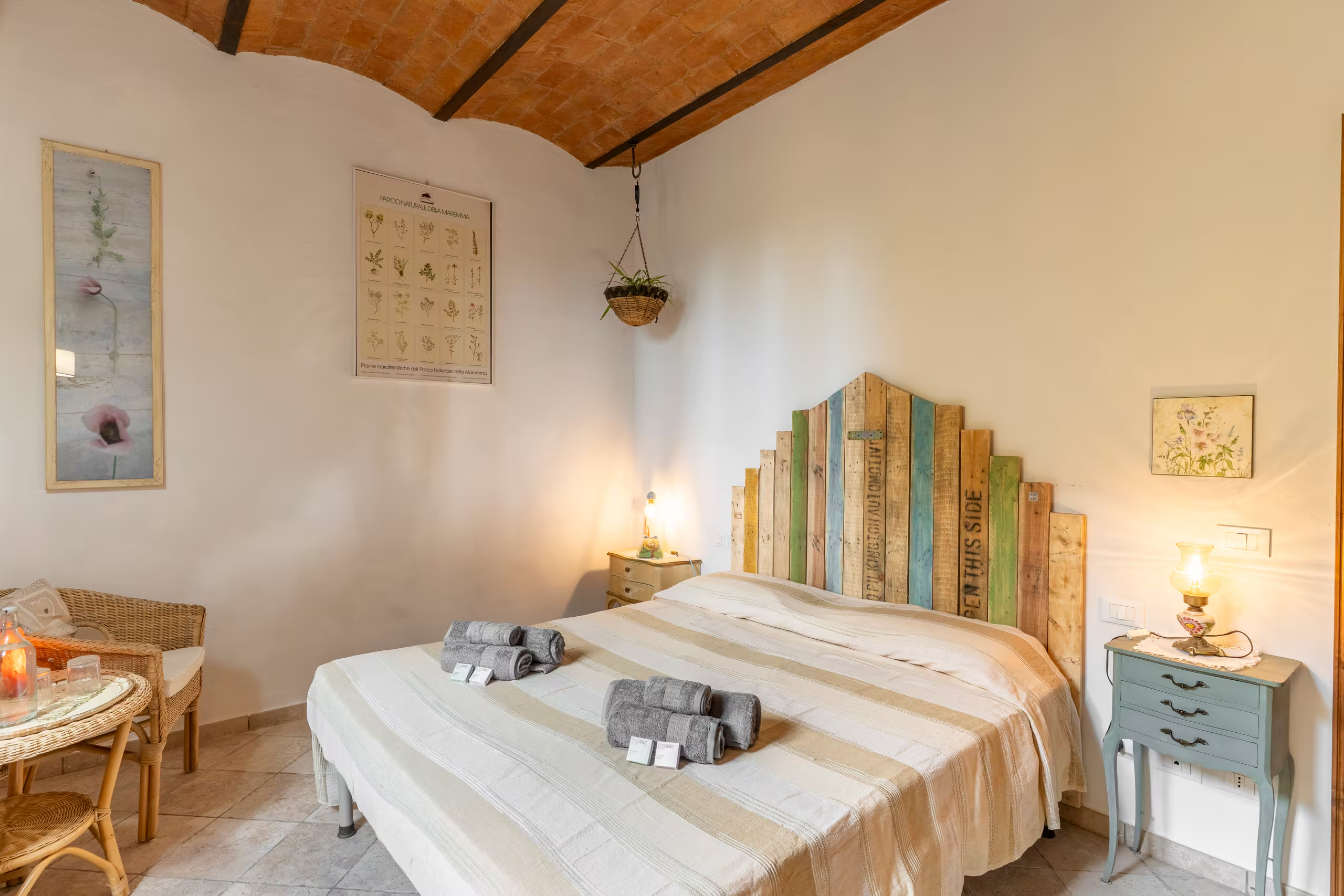
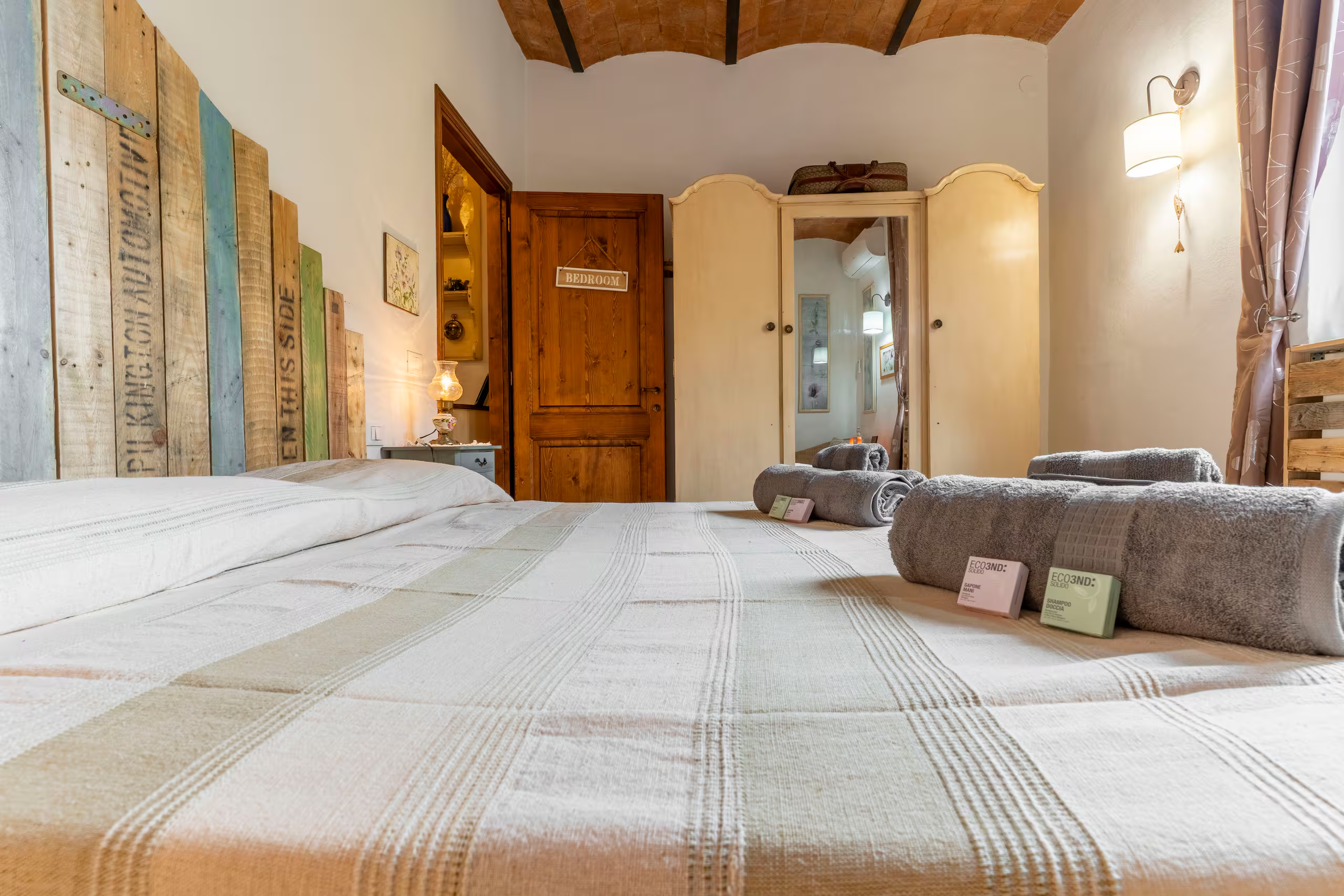
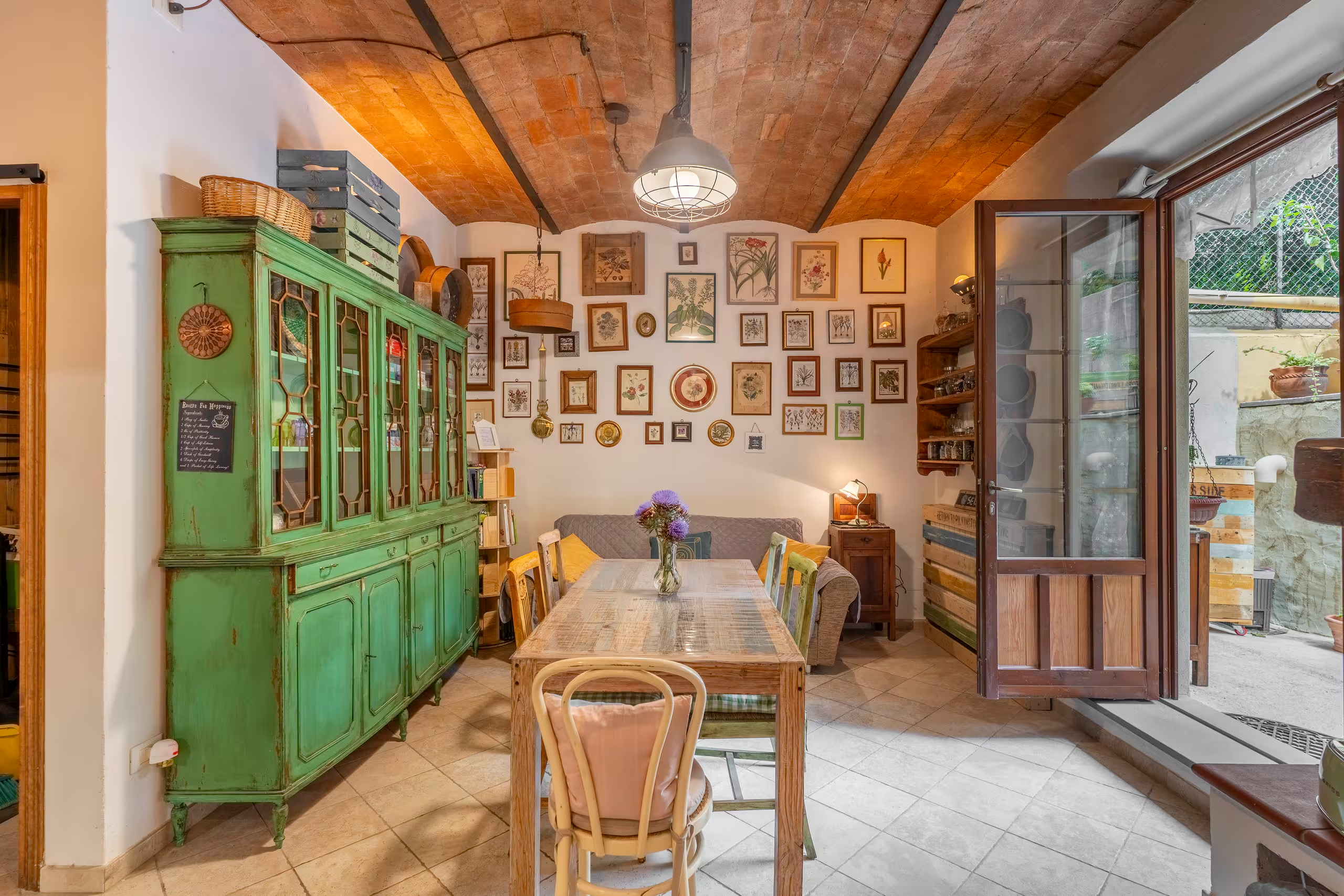
Choose a free date from the calendar and send us a request: we'll get back to you with availability and stay details.
A small space within a great story.
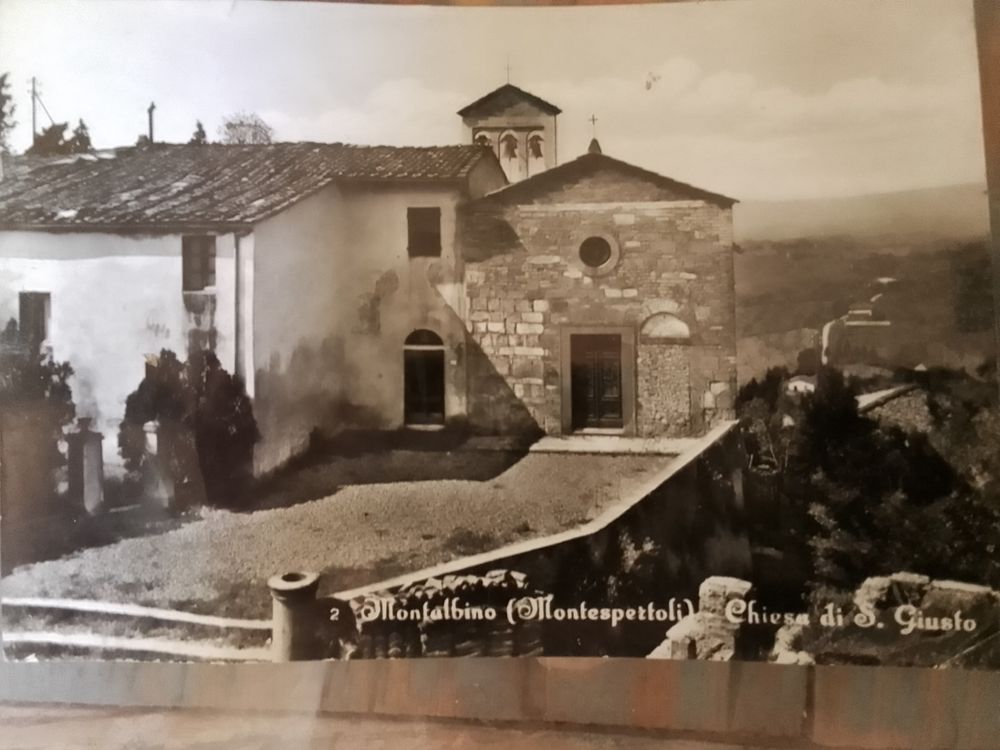
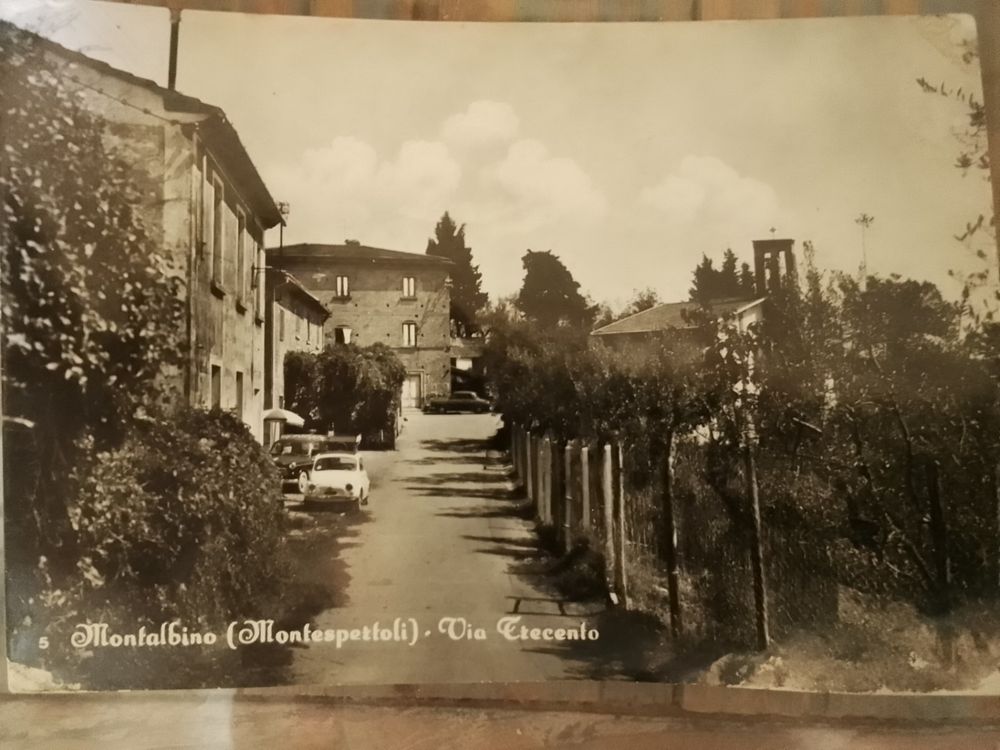
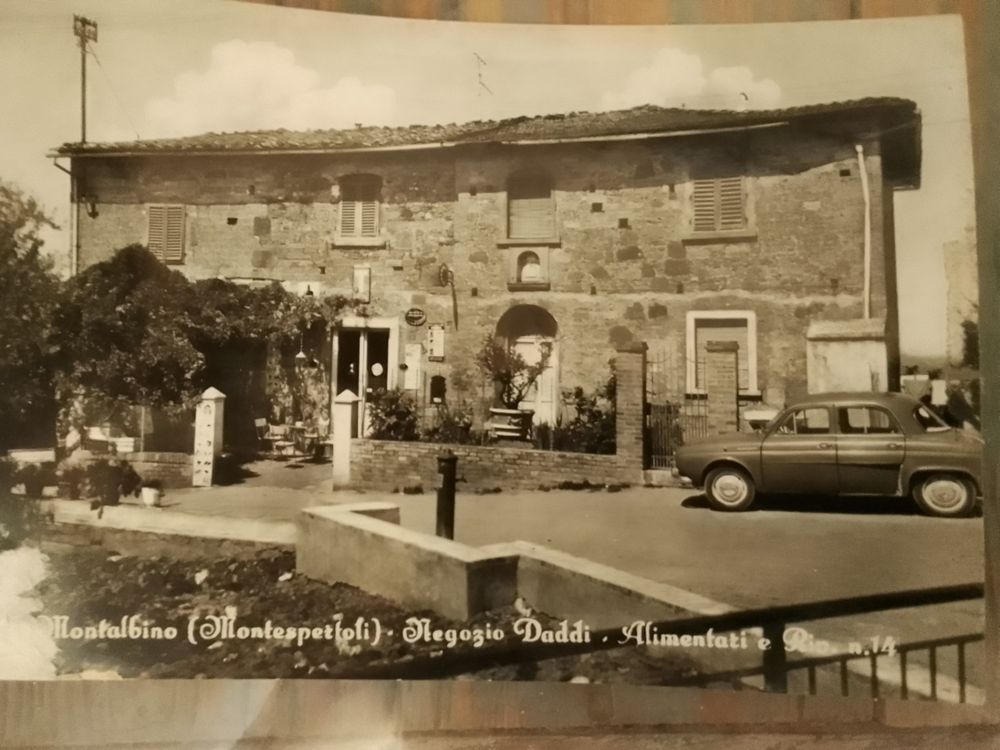
The house occupies part of an old palazzo which, according to family memory, dates back to the 19th century. Its walls tell a story of stones, sand, clay and materials gathered from the land. A story of hands, of work, of seasons and of the people who lived here before us.
The stones of Montalbino hold a story older than you might imagine. Before becoming the small hamlet we know today, Montalbino was a fortified medieval settlement, with a castle documented as early as 1114.
The church of San Giusto, still standing in the hamlet, probably began as the castle's chapel. By 1427 the castle was recorded as a "castellare", a term for a fortification that had lost its original purpose.
Over the centuries the hamlet changed its face. The old buildings were transformed, the stones reused, and spaces once tied to the castle became places of everyday life. Where the footsteps of guards may once have echoed, came the voices of families, the work of craftsmen and the rhythm of the seasons.
Casa Selva sits within this small world of stone and memory. We don't know whether its walls preserve parts of the ancient castle: that direct link is not documented. We do know they belong to a hamlet that has lived through many centuries, continuing to live and change.
Around Montalbino the landscape holds a far older memory.
The calanchi, with their clay walls sculpted by rain and wind, tell of a past when these lands lay under the sea. Even today, while walking, you may come across a small shell hidden in the earth: a fragment of very distant life, left as a witness that the landscape changes, transforms and keeps traces of its past.
Where the sea once was, wild herbs now grow, wild orchids bloom and helichrysum spreads its warm scent on sunny days.
The clay walls also host bee-eaters, birds of astonishing colours that dig tunnels to build their nests. High above, the buzzard draws circles in the sky. It is a living landscape, where every creature has a story and a role.
There are places where memory is kept not only in the stones of the houses, but also in flowing water.
In Montalbino, water has accompanied daily life for generations. It was precious: to be collected, stored and respected. Casa Selva keeps this old care too: rainwater collected from the roof was channelled into an underground well, a sign of a time when nothing was to be wasted.
Not far away, the Mensoli spring holds a family story: that of grandmother Zelinda, who lived to 102 and drank the water of that spring all her life.
I like to imagine her steps along the path, the simple gesture of drawing water, the passing of seasons and generations. Grandmother Zelinda belongs to the memory of this land, to a world where people knew the springs, the paths and the value of small things.
Today her story reminds us that a place is made not only of landscapes, but also of the lives that inhabited it. Because water, too, has a memory, and sometimes it carries the remembrance of those who came before us.
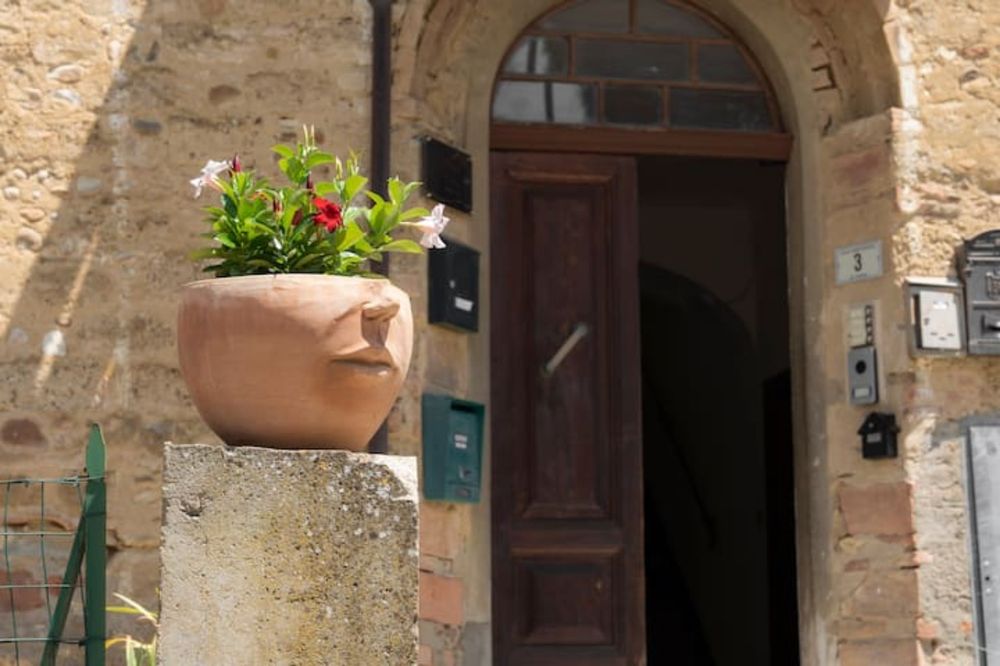
We restored Casa Selva trying to respect what was already there. Stone, terracotta and wood remained the protagonists, accompanied by the work and creativity of artisan friends.
We didn't want to turn this house into something foreign to the place, but to let it go on telling its story, welcoming new people and new experiences.
Here time can find a different rhythm. You can walk without hurry, look at a flower, listen to the birds, be surprised by a shell in the clay, or simply allow yourself the pleasure of doing nothing.
Small gestures for great balances.
The wild animals and plants of Montalbino.
Some places don't ask to be looked at, but listened to. In Montalbino, around Casa Selva, nature still has many stories to tell.
In the morning the sky belongs to the buzzard, drawing wide circles above the clay calanchi. With spring come the bee-eaters, little coloured jewels that dig their homes in the earth, right where the sea once was, long ago.
In the woods the woodpecker beats its steady rhythm on the trunks, like an ancient musician. The jay, a tireless sower, hides acorns underground and, forgetting a few, gives the future new oaks. The hoopoe crosses the meadows with its elegant crest, announcing the warm season.
When the sun sets behind the hills, the landscape changes voice. The tawny owl calls in the dark, the little owl keeps watch among the olive trees, and along the paths a life we rarely see begins: the badger leaves its sett, the porcupine crosses the undergrowth, the fox moves silently and the marten explores low walls and old trees.
In the fields the hare hides in the grass, while the roe deer appears for a moment at the edge of the woods. The wild boar leaves the marks of its passage in the soil. Each has a place, a task, a story.
At Casa Selva we are not masters of this life. We are guests, just like the animals that live here. And perhaps the most beautiful gift we can offer those who arrive is this: learning to stop, listen and recognize the wonder of small things.
Because whoever loves the earth loves themselves and others.
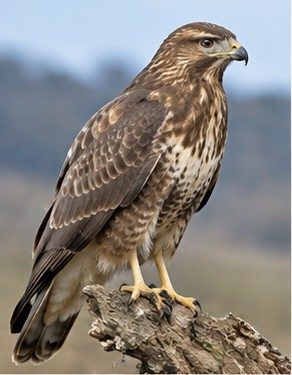
It glides over fields and calanchi on rising air. Its sharp eyesight spots the small mammals and other animals it feeds on. Its call often accompanies the silence of the countryside.
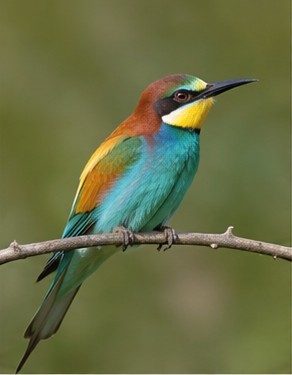
It arrives from Africa in spring and digs tunnels in earth banks to nest. The clay calanchi can offer it an ideal home.
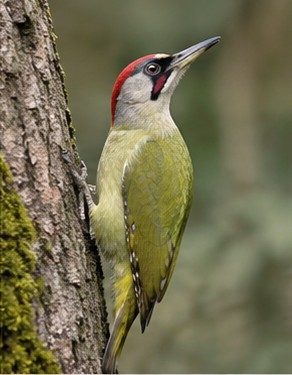
Sometimes you hear the steady beat of its beak on the trunks, as if keeping time with the breath of the woods. With its green plumage and laugh-like call, it is one of the voices of the biodiversity around us.
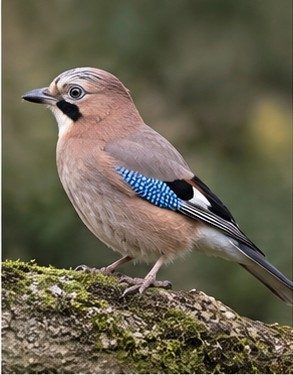
It hides acorns in the ground as a food store. Some are forgotten and can sprout, giving life to new oaks.
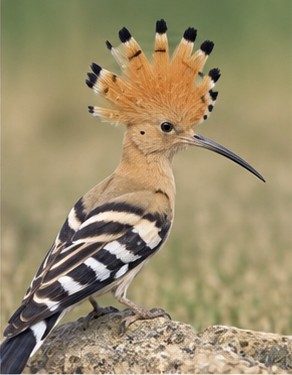
Unmistakable with its orange crest and black-and-white wings. It roams meadows and olive groves looking for insects and larvae.
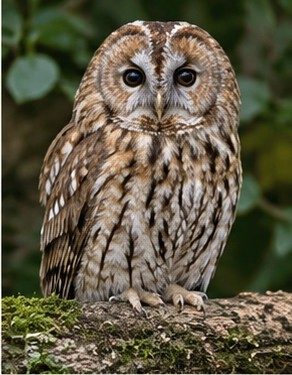
When the landscape falls asleep, its deep call crosses the woods. A nocturnal bird of prey that hunts mainly small mammals.
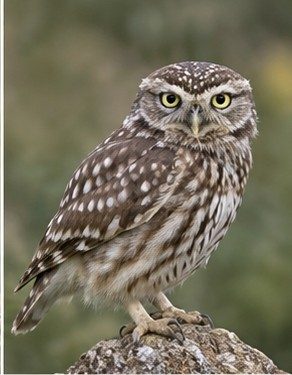
It loves farmland, old trees and stone walls. Its call can be heard at dusk and through the night.
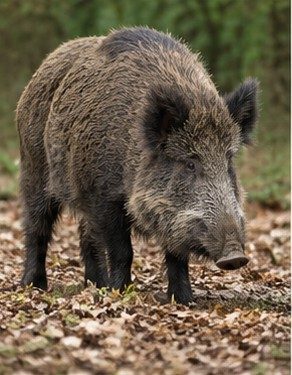
It turns over the soil looking for roots, bulbs and small animals. Where very abundant it can upset the balance of the undergrowth.
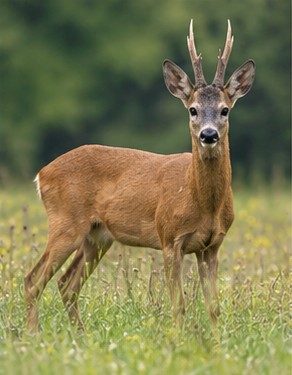
Elegant and shy, it appears at the edge of the woods, especially at dawn and dusk.
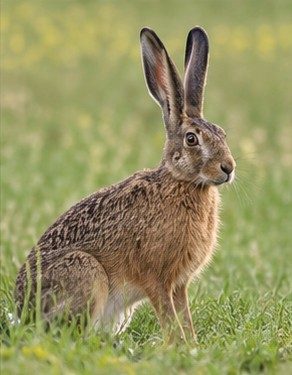
It lives in fields and meadows. Its long legs let it escape predators quickly.
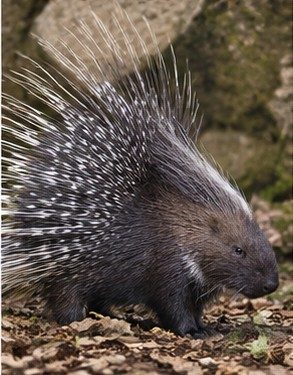
Mostly nocturnal and recognizable by its long quills. It feeds on plants, roots and tubers.

It digs underground setts, sometimes very elaborate. Discreet, it often leaves footprints and small trails in the woods.
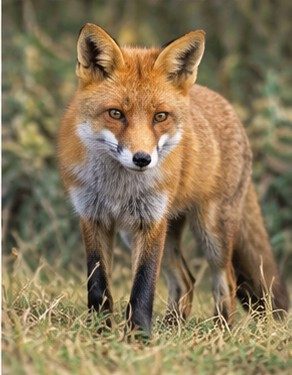
Curious and adaptable, it eats small mammals, insects and fruit. It plays an important role in the food web.

Agile and mostly nocturnal, it moves among trees, low walls and old buildings. A skilled climber.
Digitally generated illustrative images: these are not photographs taken at Casa Selva.
In Montalbino, biodiversity can also be read in the plants. In the meadows, along the hedges, at the edge of the woods and on the clay calanchi, every season leaves a trace: a colour, a scent, an unexpected bloom. Here, where the sea once was, the earth keeps shells and shelters small lives that deserve a careful look.
Orchids: a beauty to protect. Among the most precious presences are the wild orchids. Some are rare or protected: their beauty is not to be picked, but left to live. Their tiny seeds need particular soil fungi to germinate: an invisible collaboration that shows how delicate the balance of nature is.
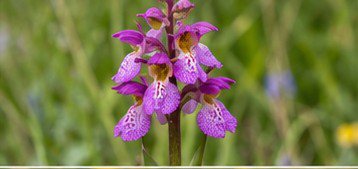
In spring its small flowers, from pink to violet, look like confetti left in the grass. One of the first orchids to colour the meadows.
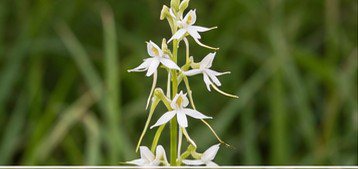
Its pale, almost white, green-tinged flowers seem to gather the twilight. Their scent draws moths and other night pollinators.
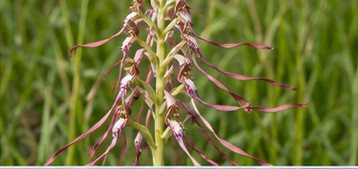
One of the most surprising: long ribbons hang from its flowers like little dancing figures. Meeting it is an invitation to stop and look closer.
Its flower looks like a small insect: nature has invented shapes that amaze and, in some Ophrys, lure pollinators by deception.
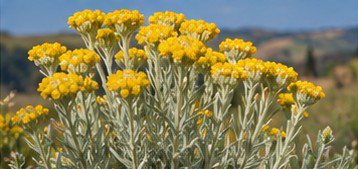
On sunny slopes it bears golden flowers and silver leaves. Just brush it to smell the warm scent of the hills: the aromatic memory of the ancient sea.
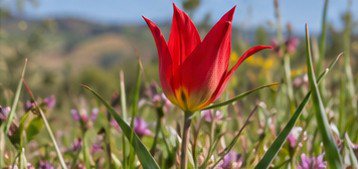
Locally the red tulip is called “spada” (sword). When it appears, spring seems to have lit a small flame among the grasses.
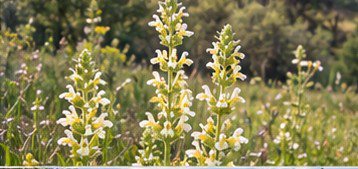
It keeps a memory of Tuscan tradition, tied to old folk gestures and rituals. A story of people and landscape, to pass on while telling folklore apart from medicine.
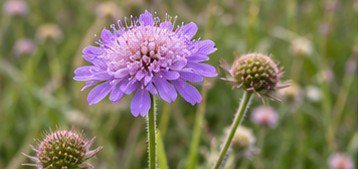
Its light, often lilac flowers offer a resting place to butterflies and other pollinators.
The simple roses of spring become the red hips of autumn. Hedges turn into shelter and pantry for many small creatures.
Along the paths, mallow opens delicate flowers like a gentle greeting. One of the most familiar plants of farming memory.
Reference illustrations, not photographs of the plants of Montalbino.
Every plant tells a story. Some feed the insects, others offer shelter, others keep the words and gestures of past generations. Protecting them means looking after the biodiversity and the living memory of Montalbino.
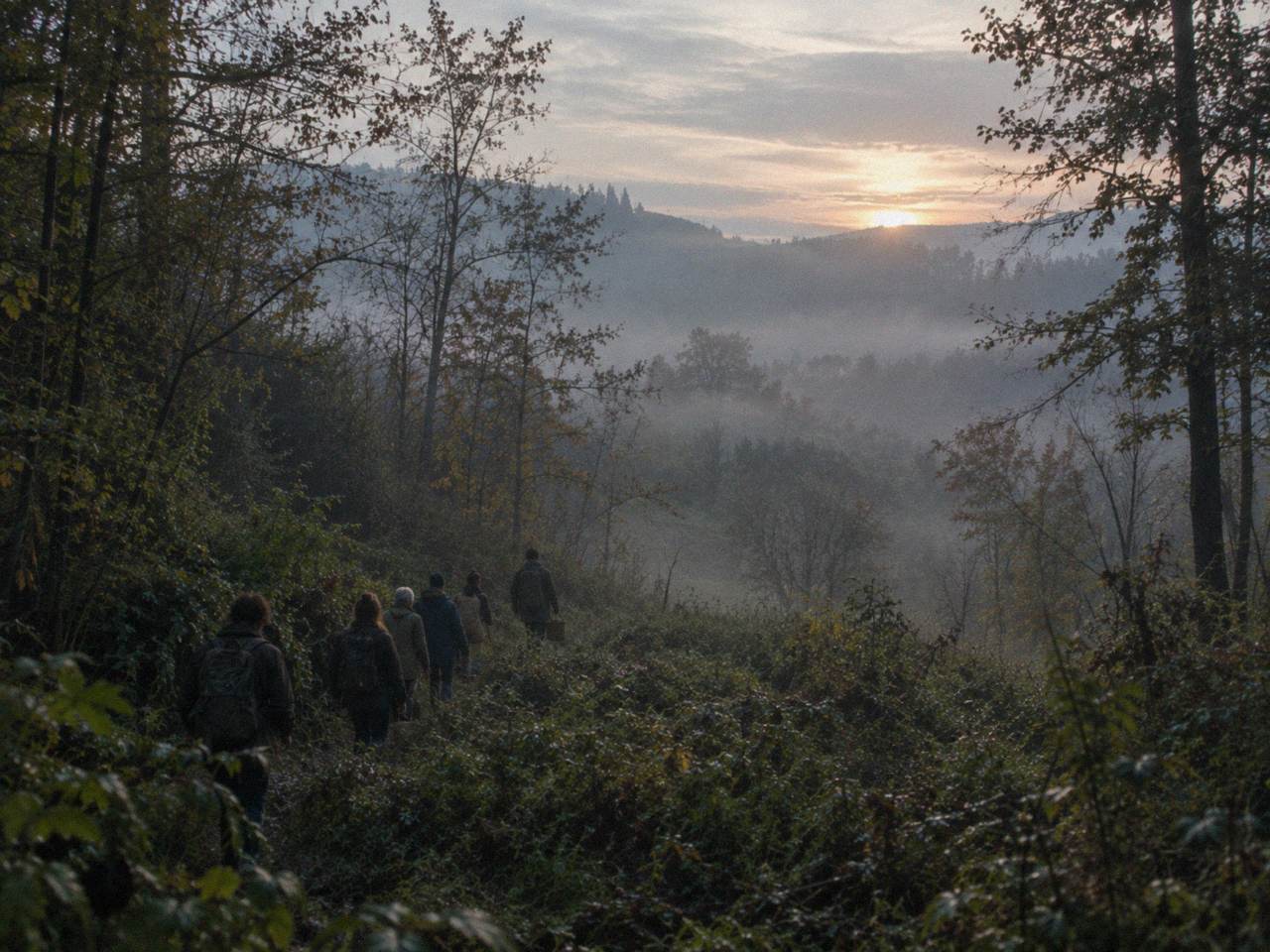
“Many plants entrust their seeds to ants, which carry them, encouraging biodiversity and the growth of new vegetation.”
It is a tiny gesture, almost invisible, yet capable of contributing to the life of an entire forest.
Like a little ant, I too gather seeds, stories and knowledge along the paths of Montespertoli, with the patience of someone who has learned to watch where she steps.
For years I have walked among wild herbs, listened to the seasons and worked with the land, trying to understand it rather than dominate it.
From this encounter La Formicola was born: a place for sharing biodiversity, where botany, creativity and old farming knowledge intertwine.
Through wild experiences we learn to observe, recognize and wonder.
With the head, the heart and the hands.
Because we are not masters of the earth, but part of it.
La Formicola's activities grow out of the land and change with the rhythm of the seasons: they can be booked individually or added to your stay at Casa Selva.
I grew up in a small country village where, as a child, our playground was simply “the fields”.
The meadows were places of adventure, the earth became a game, and plants and animals were companions in discovery. It took very little to invent a whole world.
It was grandmother Maria who taught me to recognize my first wild herbs and drew me into that world of plants, old knowledge and small everyday gestures.
My encounter with clay also goes back to childhood: playing in the river, that soft earth mixed with water became something to shape with my hands.
Perhaps it was right there, among the fields, grandmother Maria's herbs and the river clay, that my passions were born, without my even noticing.
Growing up, that curious little girl never left me. Even today I love to observe, experiment, get my hands dirty with earth and let myself be surprised by the small wonders that often go unnoticed.
I call myself a wild gardener because I love to leave room for nature, to watch its rhythms and to accompany what grows on its own. I don't try to change the land, but to know it, respect it and grow together with it.
Over the years I felt the wish to deepen this bond through training in natural farming, permaculture and biodynamics: three approaches that helped me look at the land with greater awareness, understand the relationships between living beings and recognize the value of natural balances.
These experiences enriched my knowledge without ever making me forget that nature itself remains one of my greatest teachers.
A way of growing that tries to respect the rhythms of nature, intervening as little as possible. The soil is not constantly worked, but protected and left to live. Wild plants, insects and micro-organisms become part of a balance to understand and respect.
It is not we who teach the earth how to live; it is the earth that teaches us to observe.
A way of designing and living in spaces inspired by natural ecosystems. Every element has a function and everything is connected: plants, animals, water, soil and people. It rests on three ethical principles: care for the earth, care for people and fair sharing of resources.
Then I discovered Guerrilla Gardening, a movement of rebellious, peaceful gardeners who, mostly in cities, bring flowers and biodiversity back to neglected flowerbeds, abandoned plots and forgotten corners. Among their tools are seed bombs, inspired by Fukuoka's clay balls.
I was fascinated by the idea of not waiting for someone else to care for a forgotten space, but doing it yourself with simple gestures, choosing plants suited to the place: a gentle rebellion, where seeds, earth and flowers take the place of weapons.
Because even in the cracks of concrete a flower can grow.
I am also a self-taught creative ceramist. In clay I found again the same material I played with as a child on the riverbank. I learned by experimenting, making mistakes, starting over and letting myself be surprised by the endless possibilities of this ancient earth.
In ceramics I find patience, waiting and the beauty of imperfection. Every object holds a small story and every print leaves a memory.
I am also a reuse artisan. I like to rescue what has been forgotten, gather materials and objects that seem to have reached the end of their story, and imagine a new possibility for them.
Where someone sees something to throw away, I see material to transform, a story to continue.
Because I believe everything deserves a second look before it becomes waste. After all, reusing is also a way of caring for the earth.
I am a curious person who loves to keep learning, experimenting and sharing. I believe in small gestures, in sincere relationships and in the value of care: for the land, for people and for the objects that accompany us.
Casa Selva and La Formicola were born from this way of being and living.
Casa Selva is the place where all this takes shape, among nature, clay, reclaimed materials and landscapes that tell ancient stories.
La Formicola was born from the wish to share what I have learned and what I keep discovering, through wild experiences that invite you to observe, learn, create, reclaim and wonder.
I don't only want to pass on knowledge, but to reawaken that curiosity that, as children, made us look at every small living being and every forgotten object as a discovery.
Because I believe that whoever loves the earth also learns to love themselves and others.
And perhaps, deep down, I am still that little girl playing in the fields, with the same curiosity in her eyes and hands always a little dirty with earth.
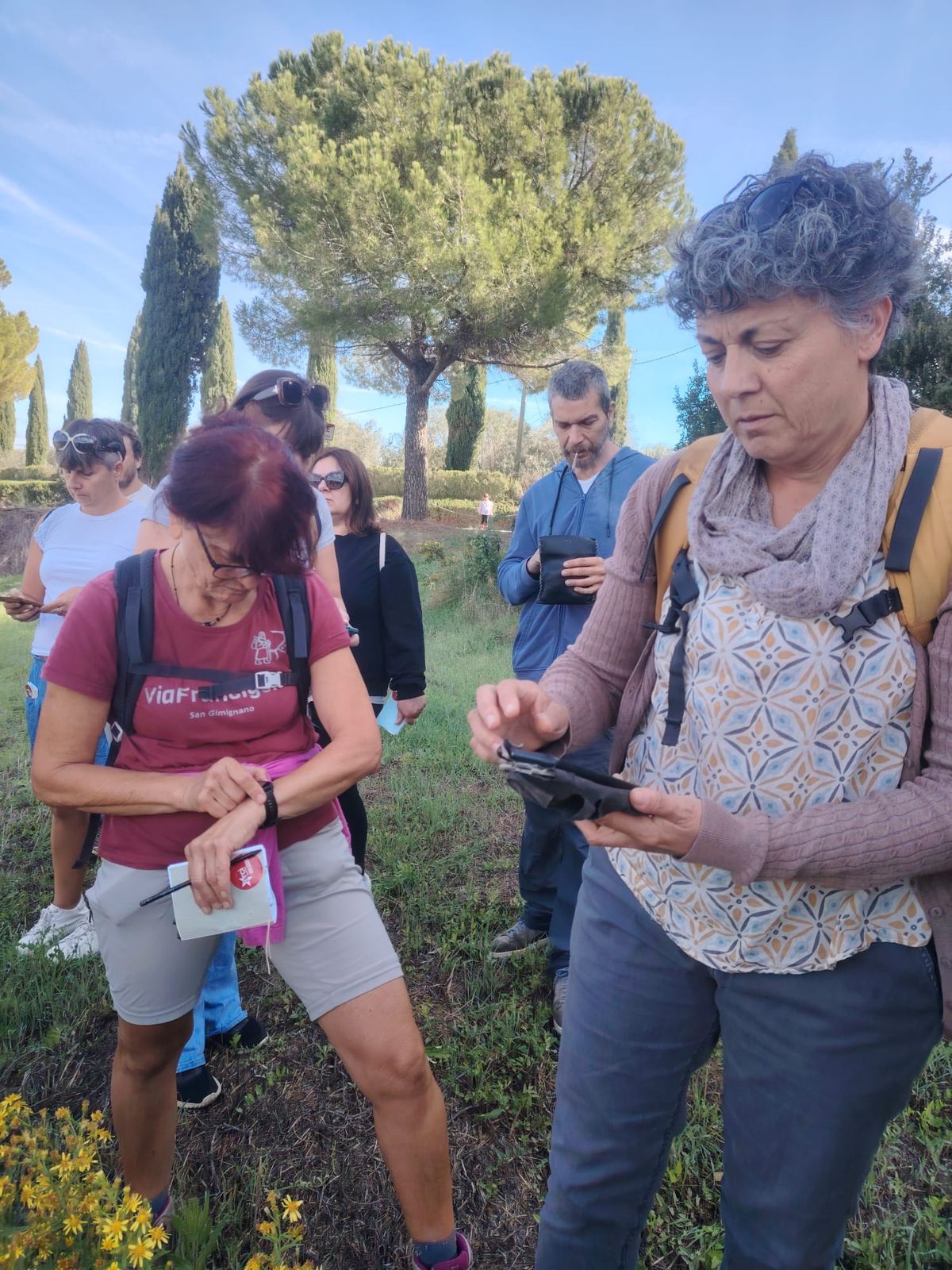
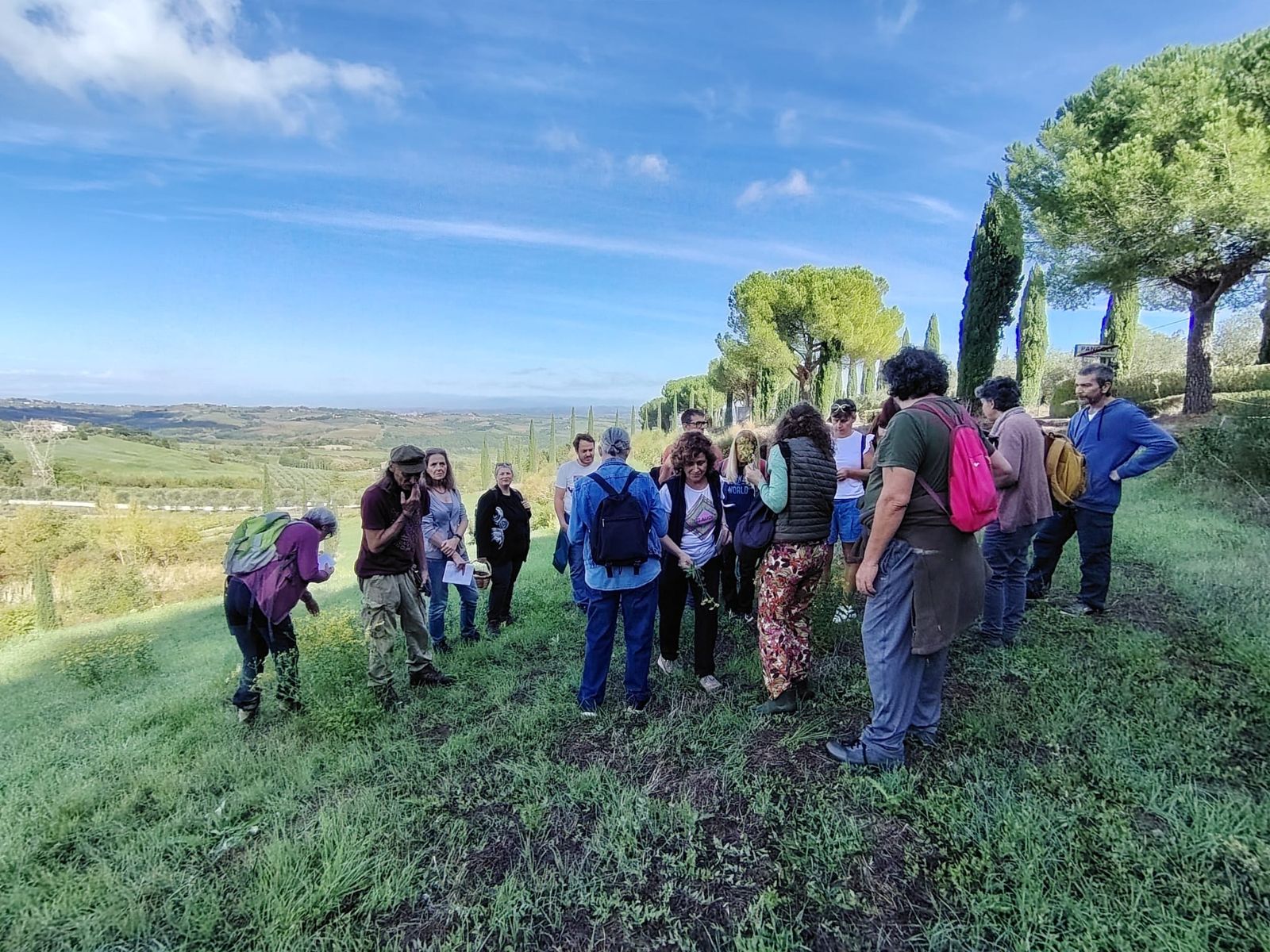
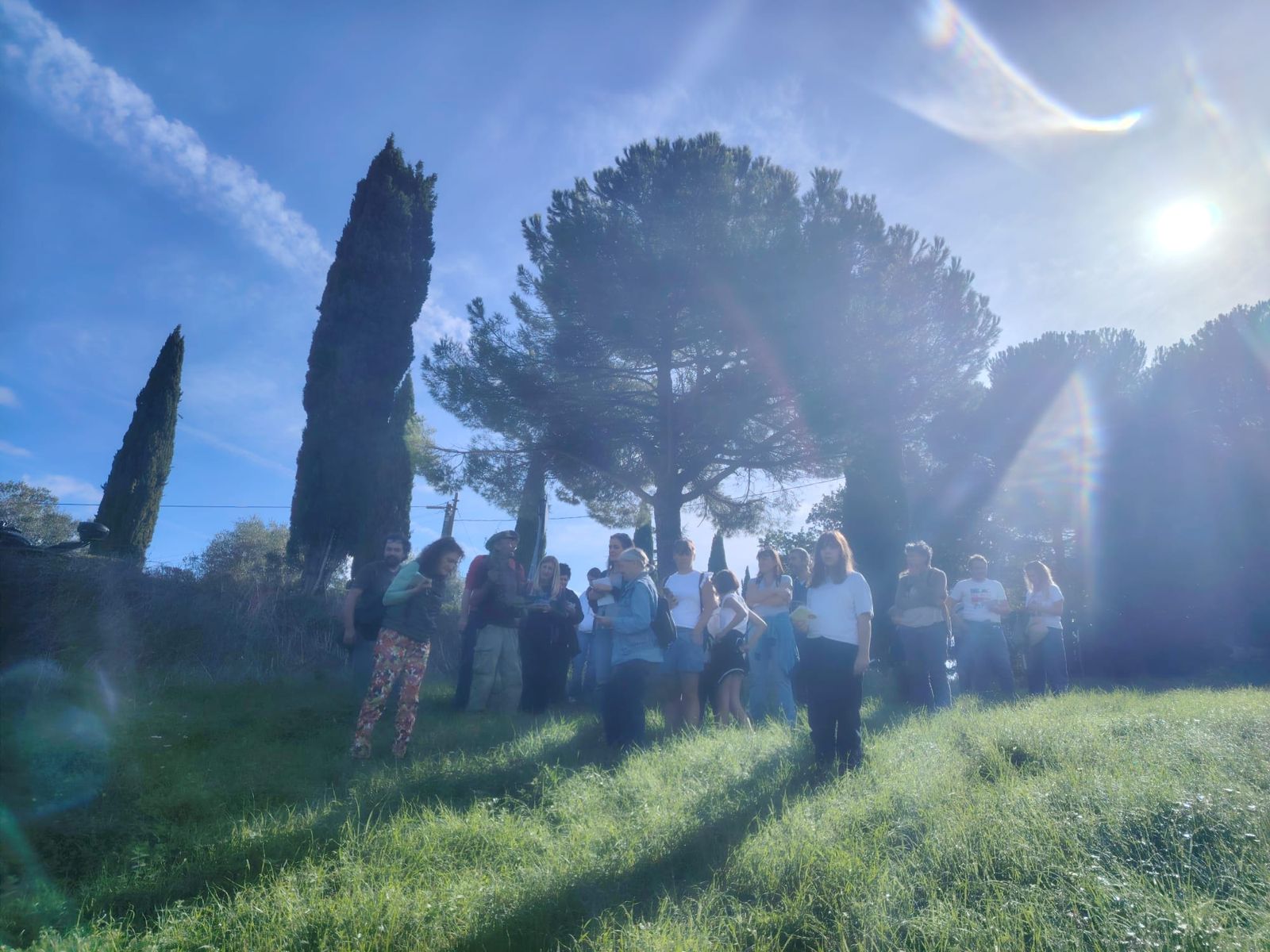
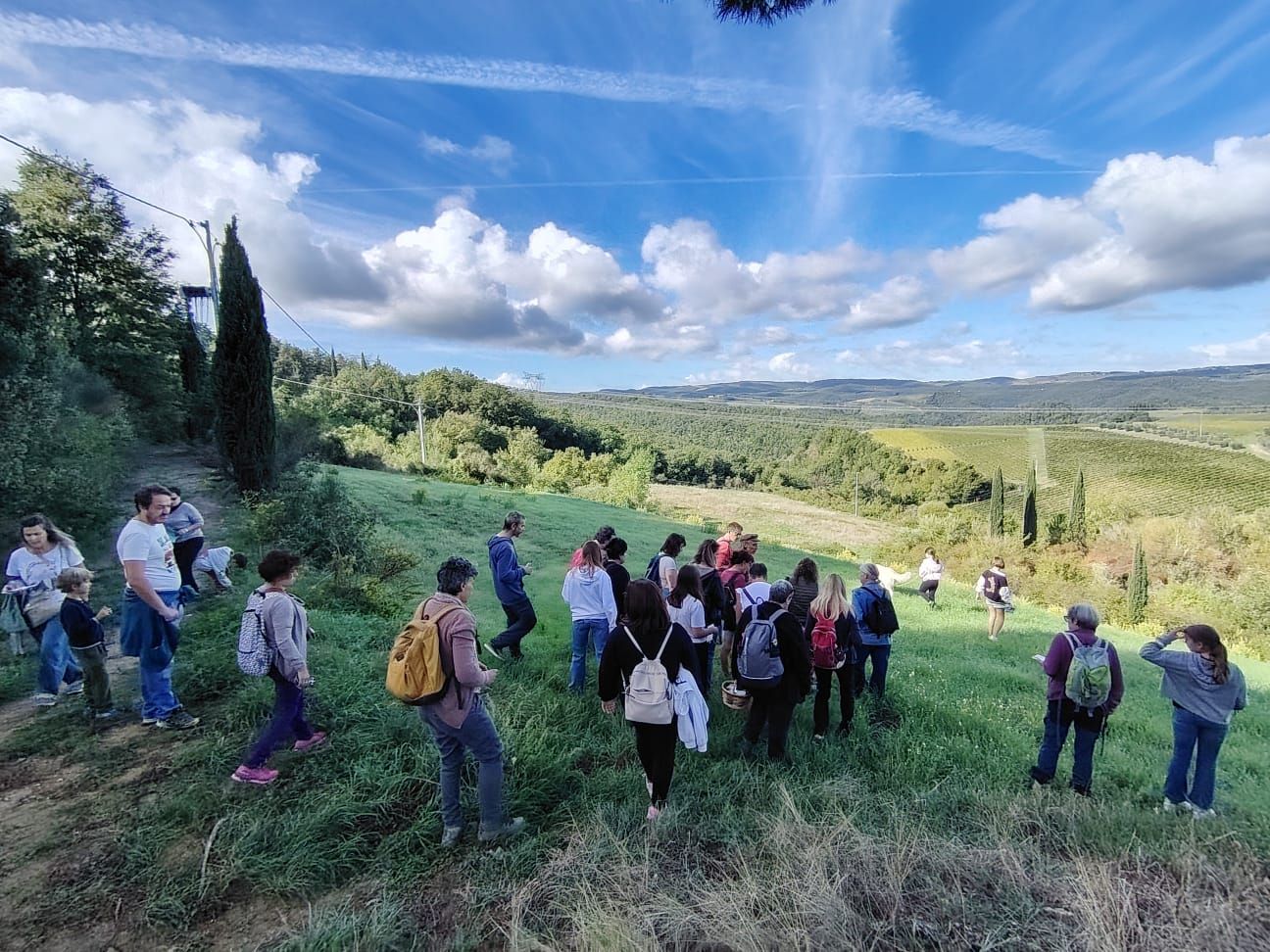
Each walk follows the paths around Casa Selva and changes with the season: in spring it's time for shoots and bitter herbs, in summer for flowers and aromatic herbs, in autumn for berries and roots.
We walk slowly, stop often, and touch and smell more than we talk.
Each plant becomes an encounter, a small story to listen to. We discover its names, its features, its old farming uses and the precious role it plays in biodiversity.
Through ethnobotany we explore the deep bond between plants and people: the traditions, myths, legends and spiritual meanings that different cultures have given them.
Because a plant is not just something to recognize or use. It can hold an ancient tale, a symbol, a message still able to speak to us today.
It teaches us patience, transformation, the ability to be reborn and the importance of living in relationship with other living beings.
Between botany, ethnobotany and magic, we walk to know nature, but also to find something of ourselves again.
A wild garden is a natural space designed with awareness, where every choice comes from observing the land and understanding its ecological balances.
Before doing anything, it is important to study the soil, the sun exposure, the water available, the climate and, above all, the vegetation already there.
Plants are not chosen at random: native species suited to the place come first, weighing their needs, their flowering through the seasons and their relationships with pollinating insects, birds and other living beings.
In my research and training I also studied the teachings of Libereso Guglielmi, known as Calvino's gardener. Through his way of looking at plants I discovered how rich a garden can be, not only in beauty but also in flavours, scents, stories and knowledge.
Libereso spoke about plants with simplicity and passion, celebrating wild herbs, edible flowers and the bond between botany and cooking. His teaching led me towards an idea of the garden where plants are not just ornamental, but can also become nourishment, discovery and a chance to share.
A garden to look at, smell, get to know and, why not, to eat as well.
A walk along the paths around the house to learn to recognize edible and medicinal wild herbs, season by season, ending with an aperitivo prepared with what's gathered along the way.
A full day in two parts: in the morning, a walk to recognize wild herbs, followed by a lunch break built around local wild herbs; in the afternoon, a hands-on workshop to learn how to turn seasonal herbs into creams, oil infusions, balms and St. John's water. The activities take place on local farms.
Leaves, flowers and stems gathered during the walk become imprints on clay slabs: a workshop halfway between a herbarium and ceramics.
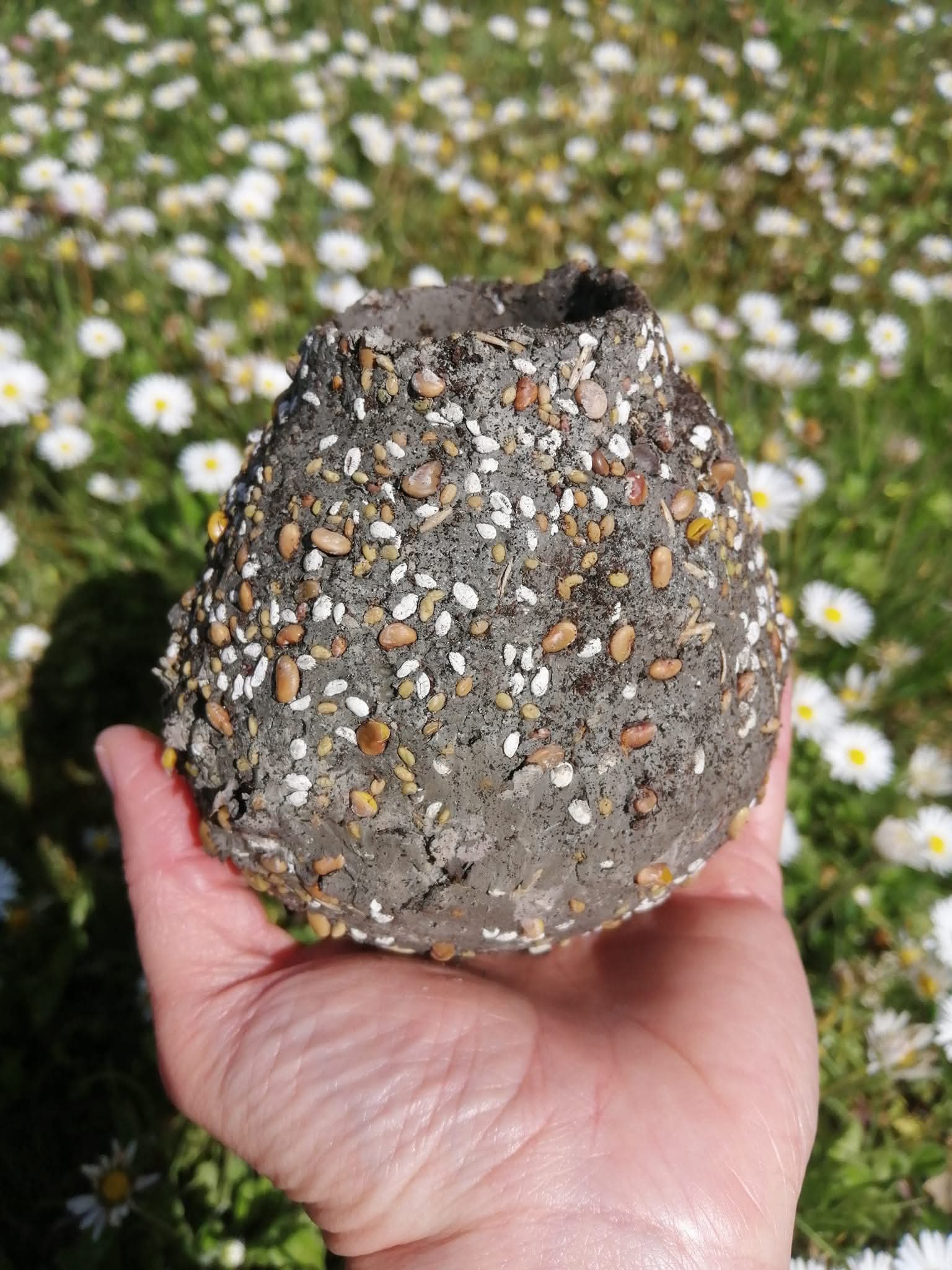
Little balls of soil, clay and wildflower seeds are prepared, ready to be thrown to bring a patch of uncultivated land back into bloom.
3:00–7:00 pm · max 6 people · full calendar
Book or ask for information about the walks and workshops by email or phone, or leave us a message in the contact form at the bottom of the page.
Walks, workshops and gatherings at Casa Selva: the last few of 2026 and the full 2027 calendar.
Casa Selva opens its doors for an afternoon of reuse, encounters and the beauty of things that can live again. Among ceramics, books, plates, cups and small forgotten treasures, we'll get together to chat and rediscover the value of what already exists.
To close, an aperitivo to share. Please book the aperitivo by 16 October, so no food goes to waste.
Before winter invites nature to rest, we'll take one last walk along paths, meadows and woodland edges. We'll learn to recognize wild plants, their old farming uses, and the stories, legends and meanings they hold. We'll walk slowly, leaving room for curiosity and wonder.
Easy route of about 2–3 km. Maximum 8 participants. Tea and biscuits when we get back.
The programme: a short walk to gather plants; then botanical ceramics, pressing leaves, flowers and twigs into the clay to turn veins and textures into small unique objects; to close, a relaxed moment together sharing local produce.
No experience needed. The pieces need drying and firing before collection or shipping.
Via Trecento 3, Montalbino (Montespertoli). Info and bookings: WhatsApp +39 329 195 9253 (Linda)
Every great tree was once a tiny seed. With Fioralbero we want to celebrate this small miracle of nature.
With our hands we'll shape raw earth into a little chest that holds an acorn or a fruit-tree seed at its heart, surrounded by many tiny wildflower seeds. One seed in the middle, many seeds around it.
A future tree, flowers for pollinators, food for insects, new relationships between living beings. Because biodiversity is not only the variety of life, but also the wonderful web of bonds that keeps it in balance.
When we entrust the Fioralbero to the earth, we won't just have sown seeds: we'll have made a gesture of trust in the future.
An experience to share with children too, discovering through our hands that we are not spectators of nature, but part of it.
Via Trecento 3, Montalbino (Montespertoli). Info and bookings: WhatsApp +39 329 195 9253
When everything seems to rush towards Christmas, we'll treat ourselves to a slow afternoon of clay, nature and creativity. We'll make small decorations and botanical objects using prints of leaves, twigs and other plant elements. Every piece will be different, because every hand leaves a mark and every plant tells a story.
Open to those who have never worked with clay too. Pieces need drying and firing.
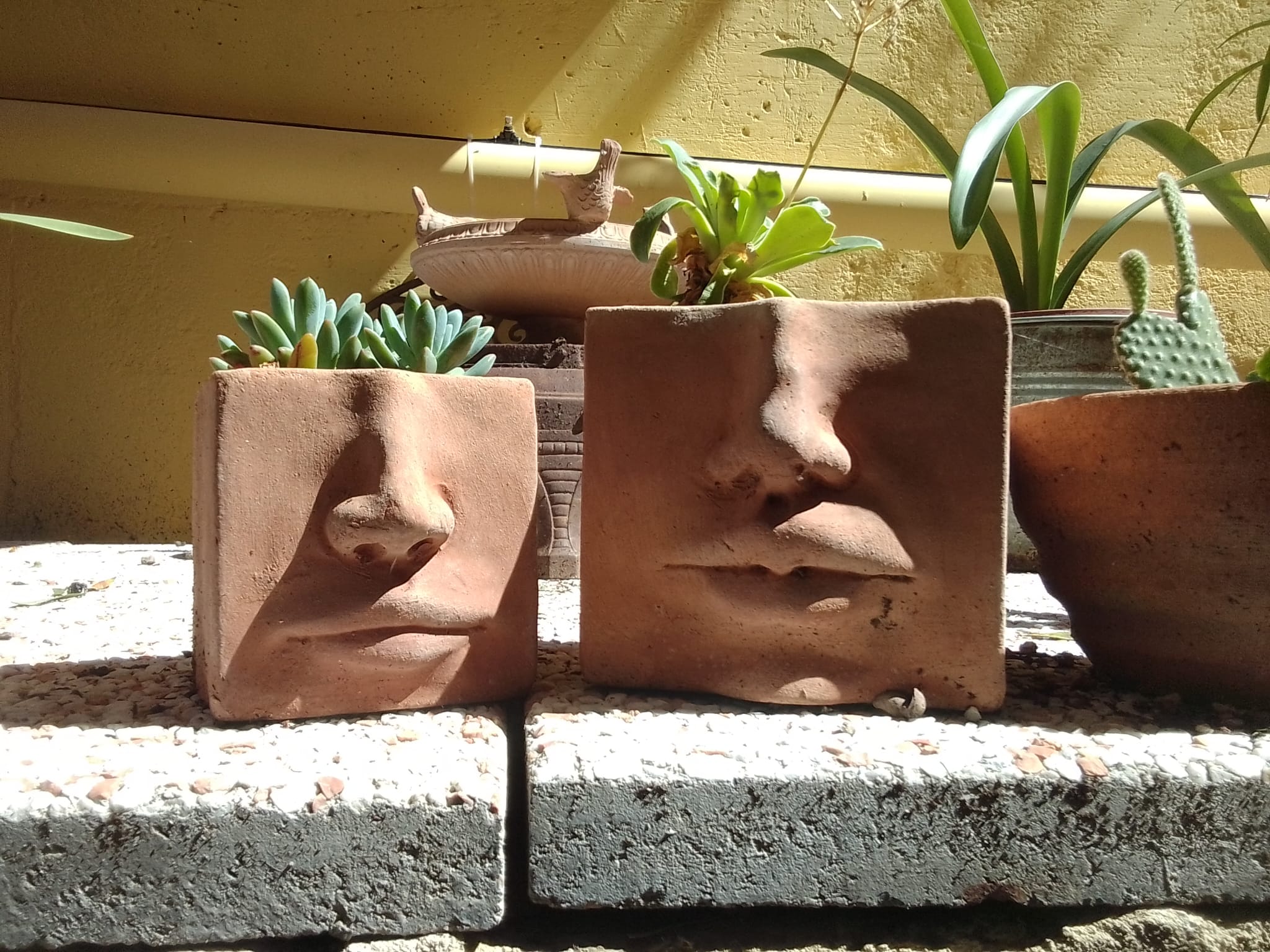
At Casa Selva, ceramics is born from the meeting of hands, earth and time.
Clay is an ancient material that holds the memory of our planet. Here, on the hills of Montalbino, the calanchi (clay badlands) tell of a sea that covered these places millions of years ago. Even today the earth gives back small shells, silent witnesses of that story.
Shaping clay is an ancient gesture that has accompanied human beings for millennia. Hands learn to listen to the material, to respect its timing, to welcome imperfections too.
Ceramics invites us to slow down, to let go of the need to control everything, to rediscover the simple pleasure of making.
The workshops are designed for those who have never touched clay and for those who want to return to it: no experience required, just the desire to get your hands dirty.
The clay that characterizes the land of Montalbino, in the hills of Montespertoli, is tied to the geological history of this part of Tuscany.
Millions of years ago, during the Pliocene, part of these hills lay under the sea. On the seabed, very fine particles of clay, silt and other sediments slowly settled.
Over time the sea withdrew, the land emerged, and erosion by water and wind helped shape the landscape we know today.
This is also how the calanchi were born: landforms deeply carved by water, especially typical of clay soils.
Fired earth: clay that is shaped, left to dry and then transformed by fire in the kiln. It becomes hard and lasting.
Never fired: it stays living earth, and dissolves again in water. That makes it perfect for seed balls that break down in the rain and return their seeds to the soil.
Raw clay is earth that meets water and takes shape in the hands, with no need to pass through fire.
It is an ancient, simple and natural material that people have used for millennia to build, create and tell stories.
Unlike ceramics, raw clay is not fired. It is left to dry slowly in the air, keeping the possibility of becoming soft again when it meets water once more.
It is a material that teaches us that not everything has to become eternal to have value.
Clay balls, also known as seed balls, are small spheres made of clay, water and seeds, sometimes with some organic matter added.
The clay wraps the seeds like a small protective shell, helping to shield them from birds, wind and scattering.
Once dry, the balls are spread on the ground with no need to dig or plough.
When the rain comes, the clay slowly softens and breaks apart, letting the seeds meet the soil and, when conditions are right, sprout.
Hands meet the earth, water makes it pliable, air dries it and fire transforms it.
Earth, water, air and fire: the four elements meet in ceramics.
It is not only about making an object. It is rediscovering an ancient bond with nature, with slow gestures and with time.
Every piece of clay holds a memory, and every hand that shapes it adds a new story.
One of the oldest ceramic techniques. The clay is worked by hand into long coils, which are stacked and joined one to another. Slowly a form appears, as if the earth were growing between your fingers.
It starts from a small ball of clay. With the pressure of the fingers, especially the thumb, the material is opened and shaped. A simple, primitive, instinctive gesture: hands talk directly with the earth, leaving their own mark on the surface.
The clay is rolled into flat sheets that can be cut, folded, decorated and joined. This technique makes plates, containers and many other forms, and welcomes the prints of leaves, flowers and other botanical elements.
In ceramics I don't look for perfection, but for the authenticity of the gesture.
Every small irregularity tells of the hands that passed, every print keeps an encounter.
Because working clay also means this: letting the earth tell its story through our hands.
Some encounters deserve to leave a mark.
Botanical ceramics is born from the meeting of earth and the plant world. A leaf, a flower, a small twig become the protagonists of a silent dialogue with the clay.
Every plant carries a story, a shape, a weave of veins that tells of its life.
Hands gently gather what nature offers, lay it on the still-soft clay and, with light pressure, keep its imprint.
The leaf is then lifted away, but its presence remains.
Air dries, fire transforms, and what was fragile and fleeting becomes a lasting memory.
It is not just about decorating an object, but about holding a moment, keeping the memory of a season, a walk, an encounter with a wild plant.
Botanical ceramics is a small herbarium of earth, where plants are not preserved but told through their prints.
A way to remind ourselves that even what seems small and silent leaves a trace in the world.
An introduction to clay work suitable for all ages: you shape a small object to take home once it's fired.
Imprints of wild leaves and flowers pressed into clay: the same activity offered in the Herbs section, seen here from the workshop side.
Clay, soil and wildflower seeds become little spheres ready for sowing. Here the clay stays raw and never goes in the kiln: the rain dissolves it and lets the seeds sprout. A workshop suitable for children too.
An informal aperitivo among the workshop benches, to discover clay work in a convivial moment, between a glass of wine and hands in the clay.
3:00–7:00 pm · max 6 people · full calendar
Book or ask for information about the ceramics and clay workshops by email or phone, or leave us a message in the contact form at the bottom of the page.
La Formicola spreads her wings and sets off, bringing clay, seeds, leaves, flowers and plenty of desire to create together. Every experience is tailored to the people, the place and the occasion.
We don't always go out to meet nature. Sometimes nature comes to visit us.
Book this activity →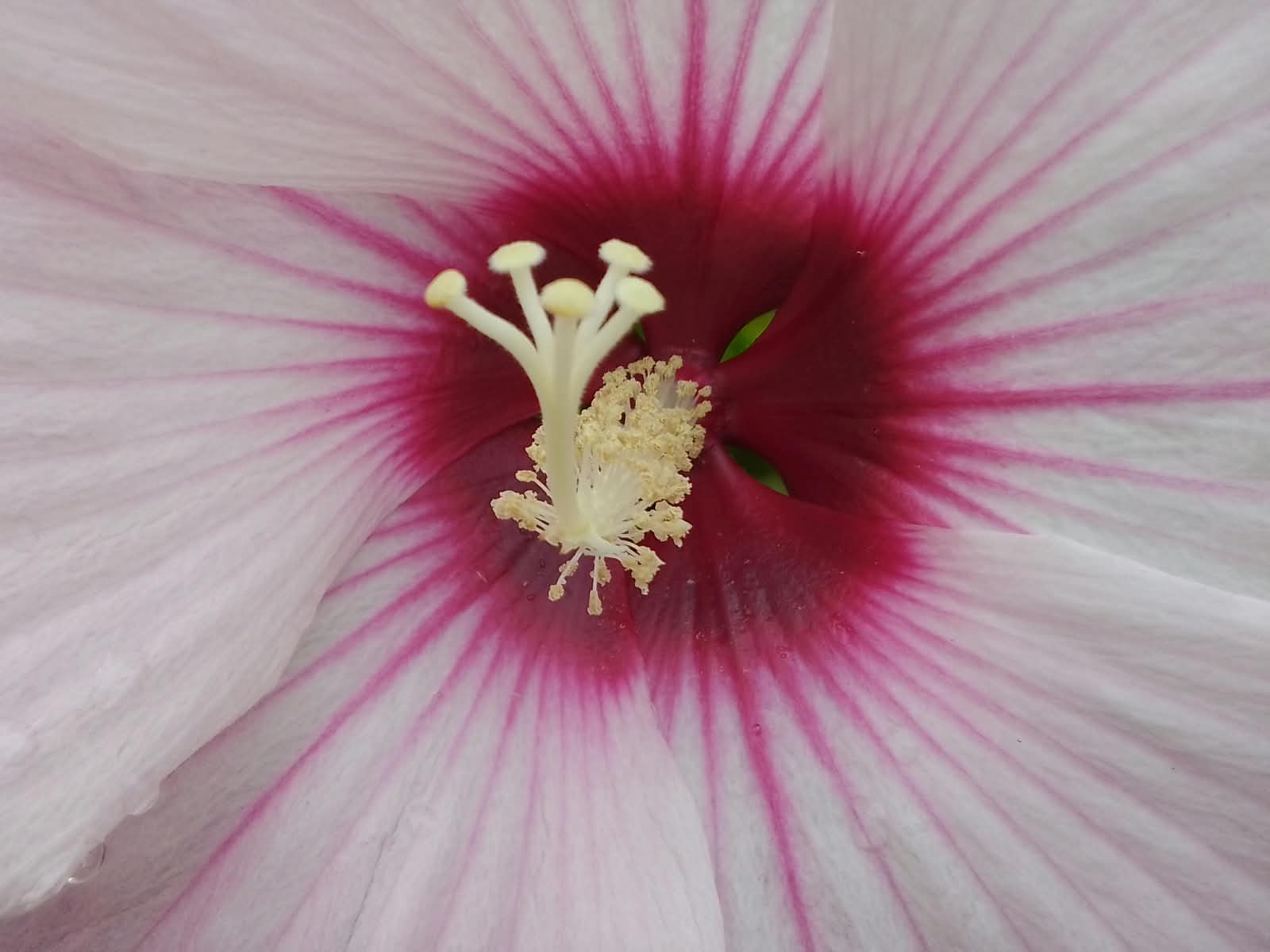
Seven days to slow down, reconnect with nature and rediscover the pleasure of small things.
At Casa Selva, sustainability is not just a word but a way of living. It means learning to observe nature, respecting its rhythms, getting to know wild plants, shaping the earth with your hands and rediscovering the pleasure of cooking together.
A stay for two, up to a maximum of four guestsSustainability Week is not an organised tour with a tight schedule. It is an invitation to slow down, alternating experiences, encounters and moments of freedom.
Activities are offered by Casa Selva and by friends and local partners: the friends of Via Trecento. The programme can be tailored and activities are by reservation.
Book the week →Handmade objects, stories from the land, and something we'll reveal soon.
Ceramics and small handmade objects by la Formicola, the same ones that come out of the Clay workshops.
Go to the galleryNotes from the woods, seasonal recipes and stories from Casa Selva and the Montespertoli countryside.
Read the stories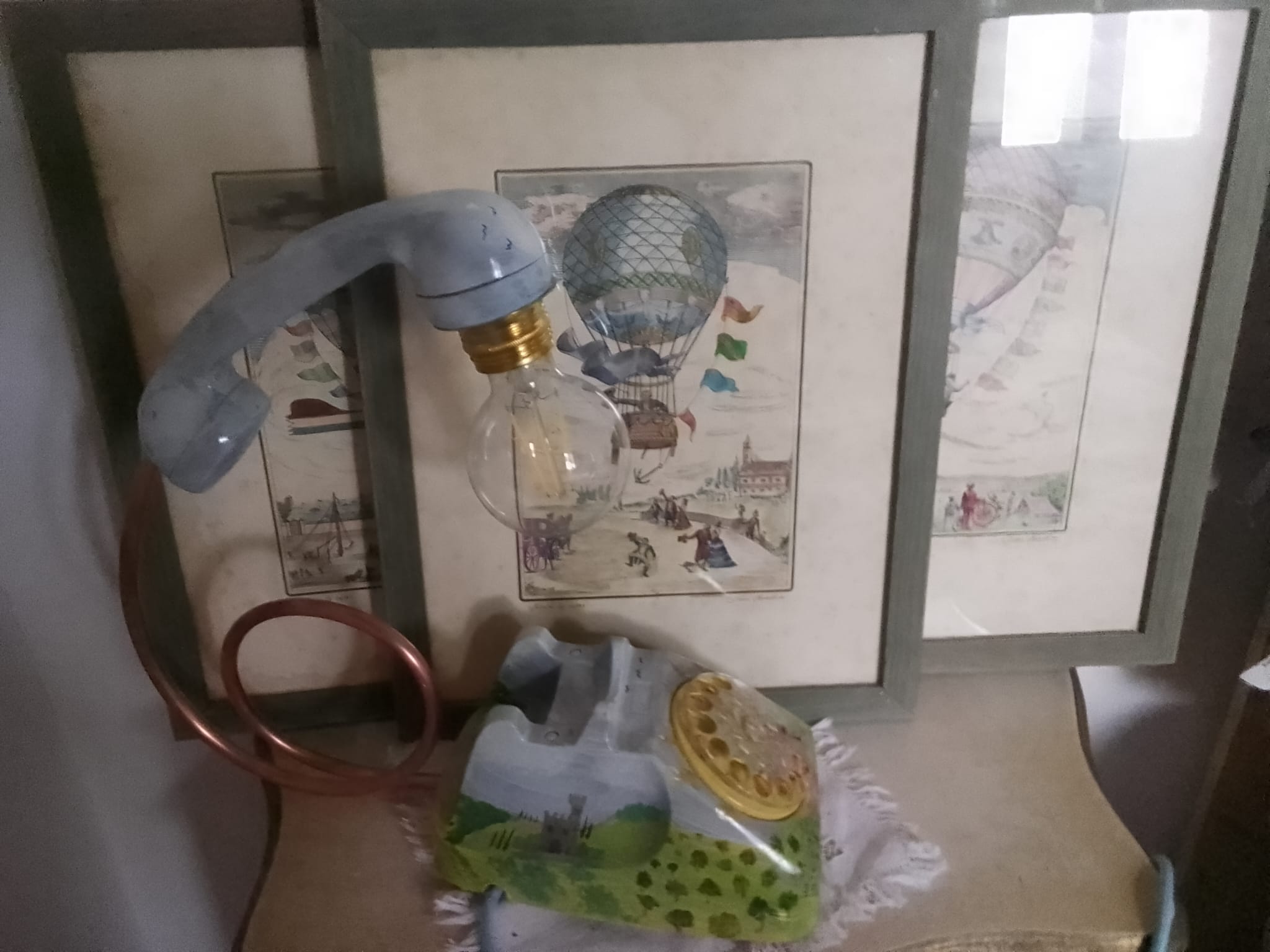
Objects with a story, for a new life: Casa Selva's reuse market. Next date: Sunday 18 October.
Find out moreVideo glimpses into la Formicola's world and the land around Casa Selva.
Not everything old has finished telling its story. In the reuse corner every object can find a new home, a new purpose, a new life.
A small market at home, born from the idea that reusing means producing less waste and giving more life to things that already exist.
Ceramics · plates and cups · glass and bottles · books · small objects and forgotten things waiting for a new home.
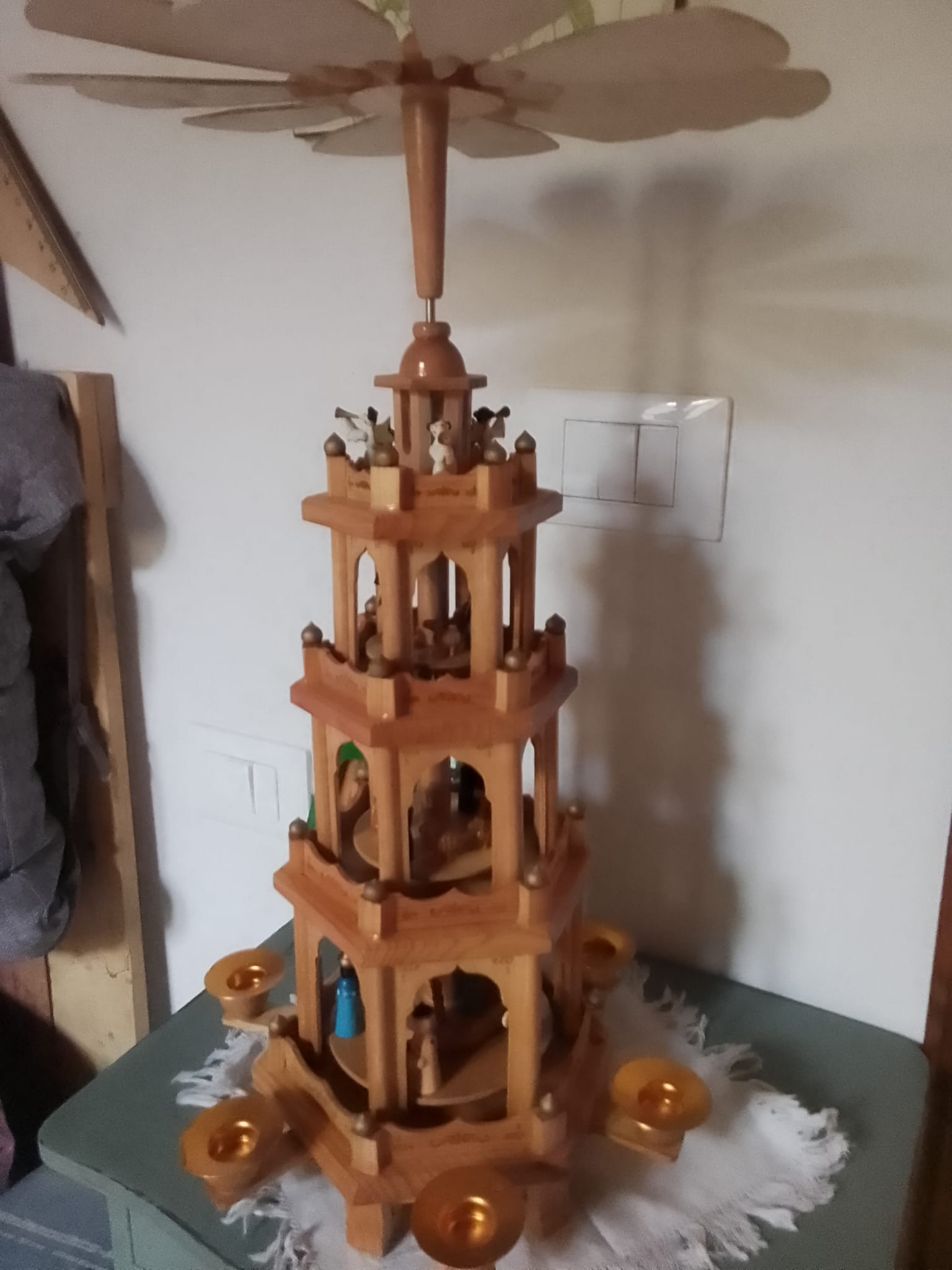
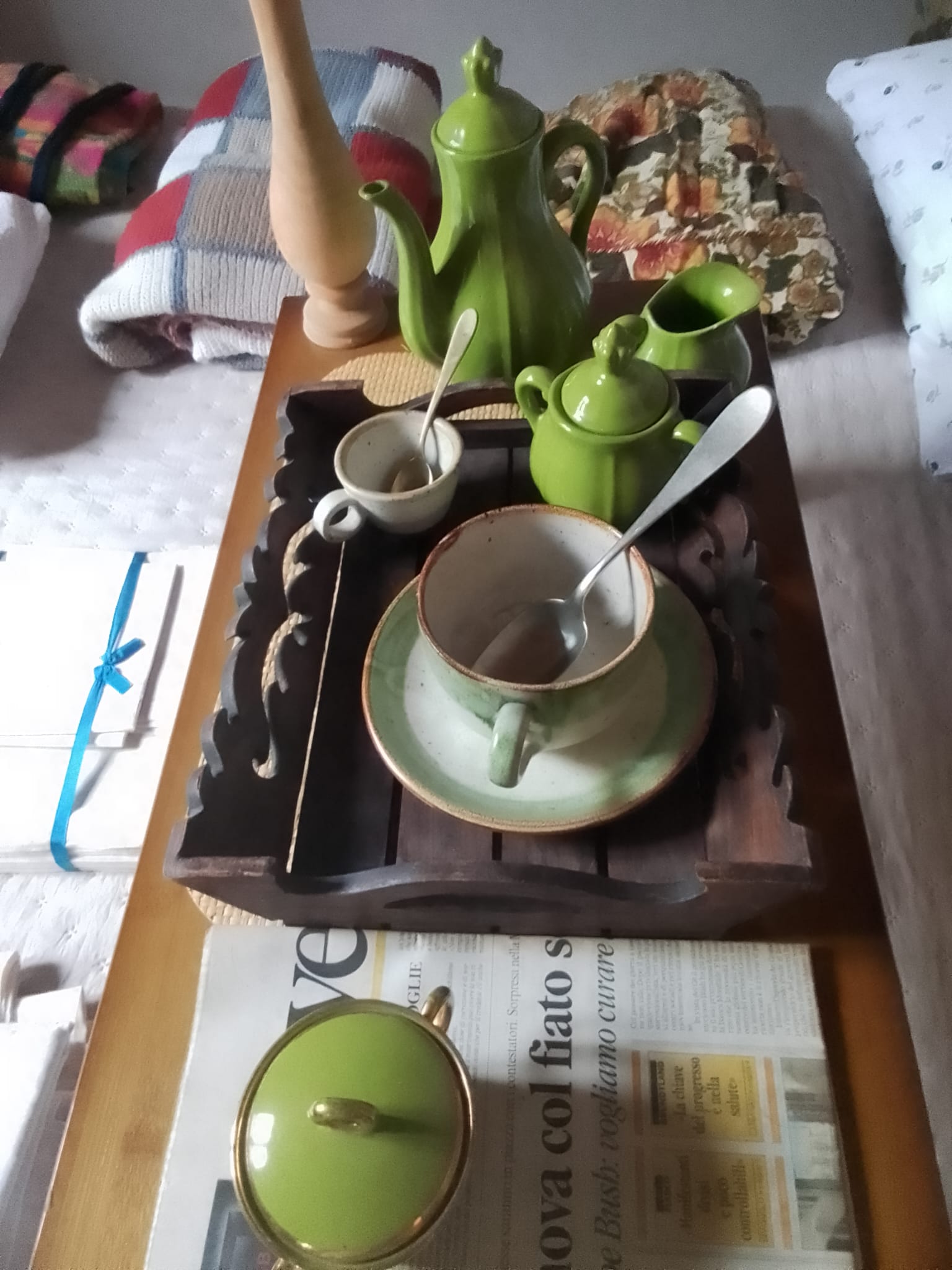
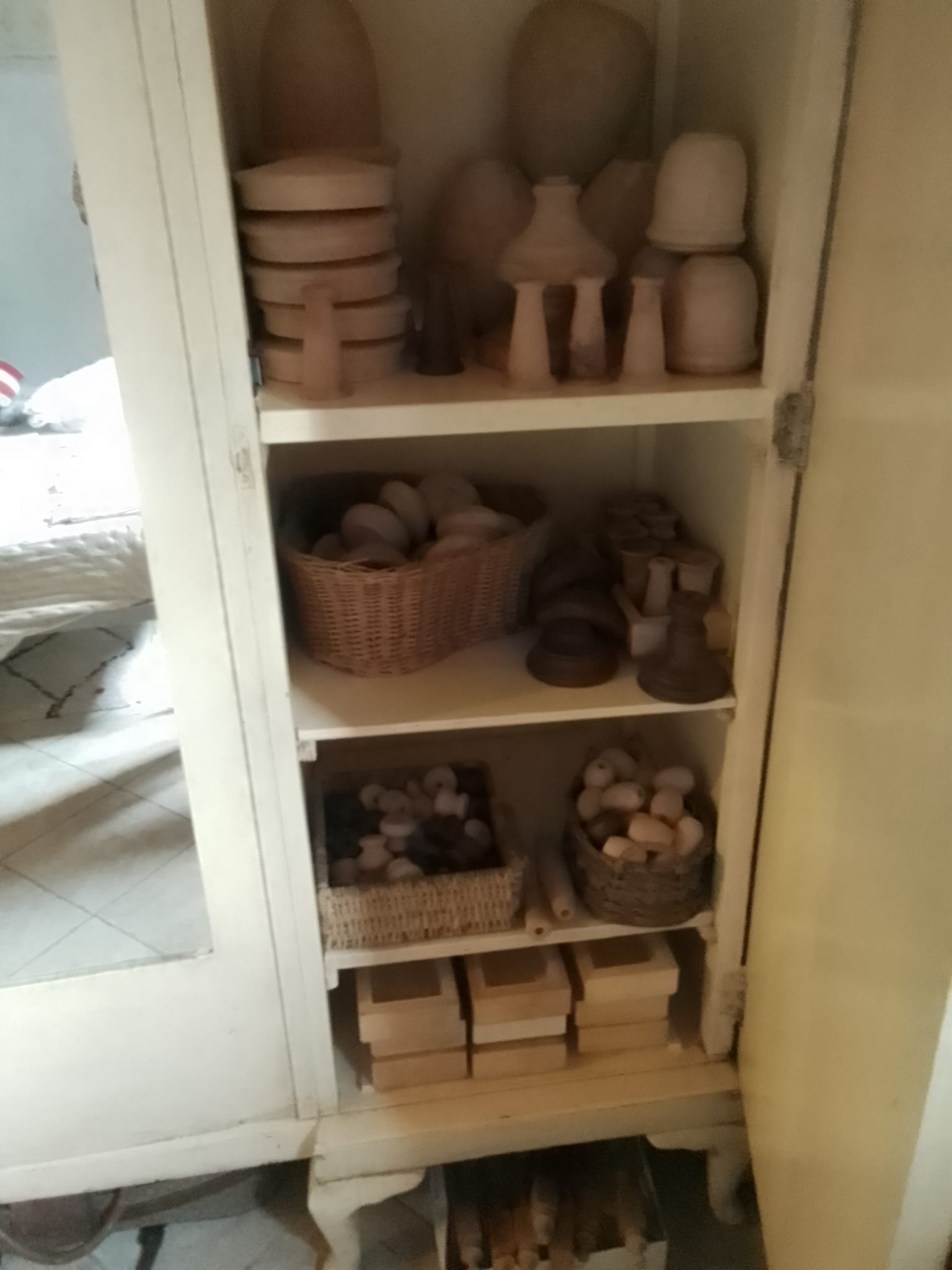
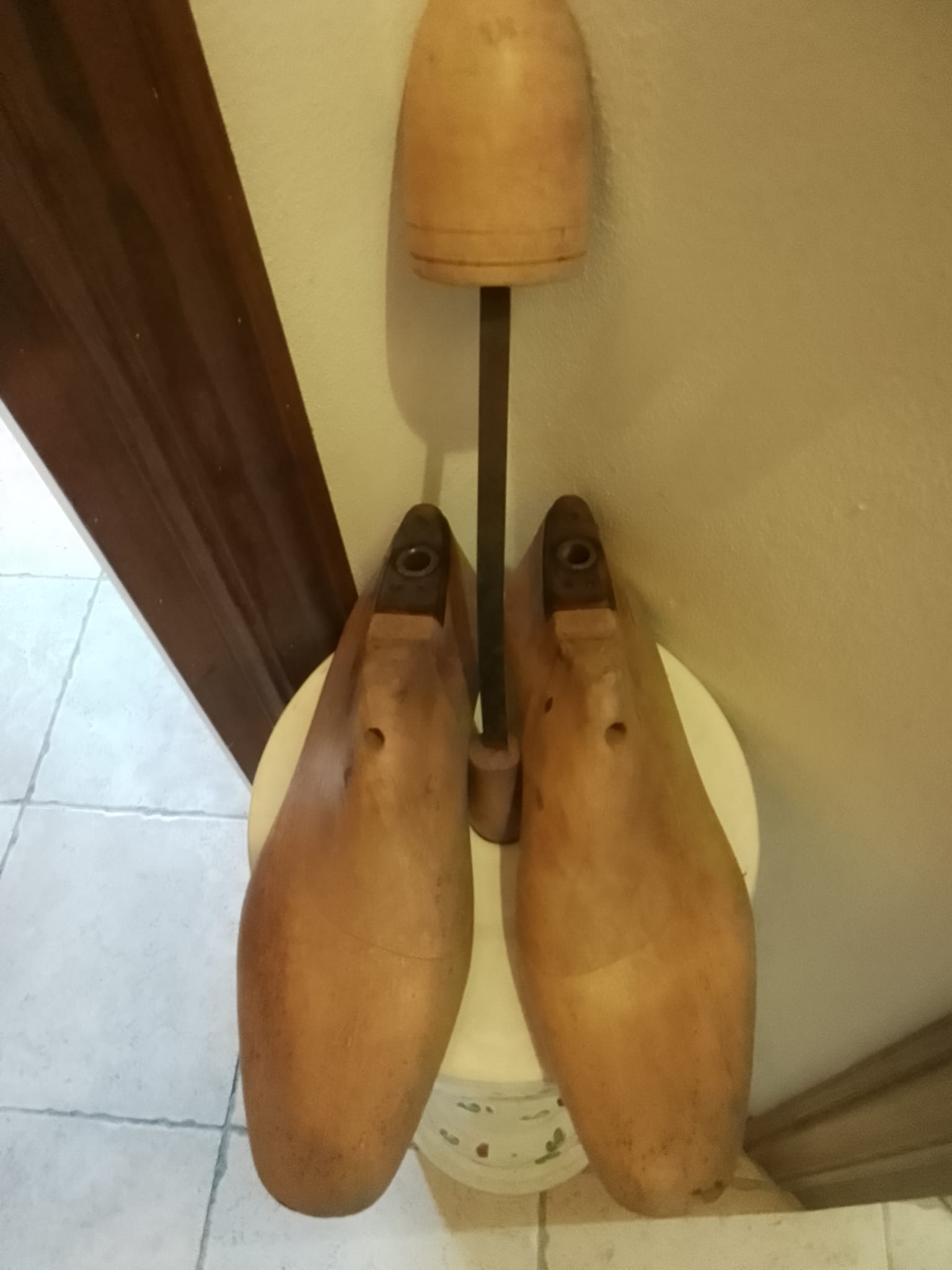
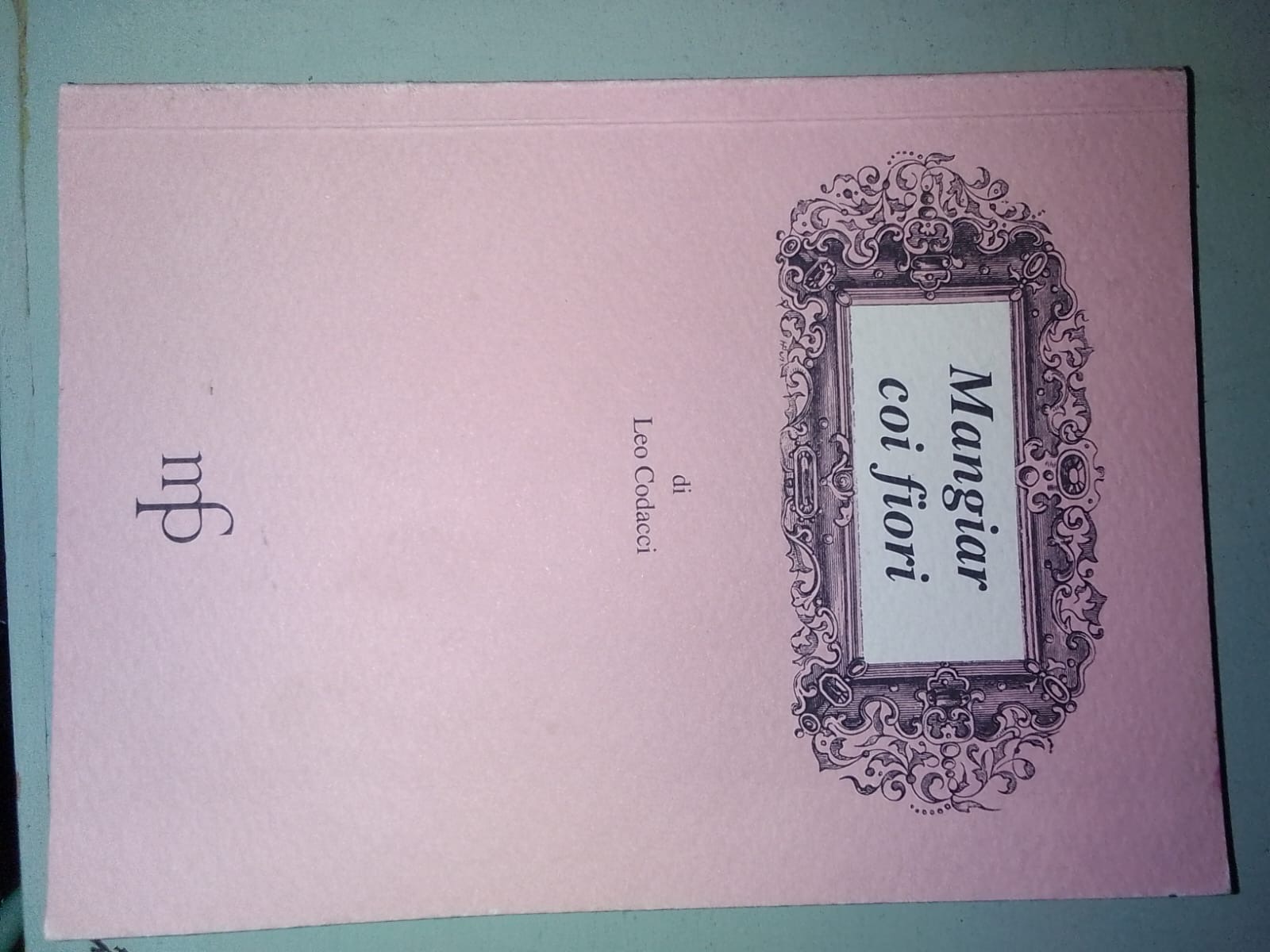
A collection of books on herbs, wild plants and country knowledge available to guests staying at Casa Selva.
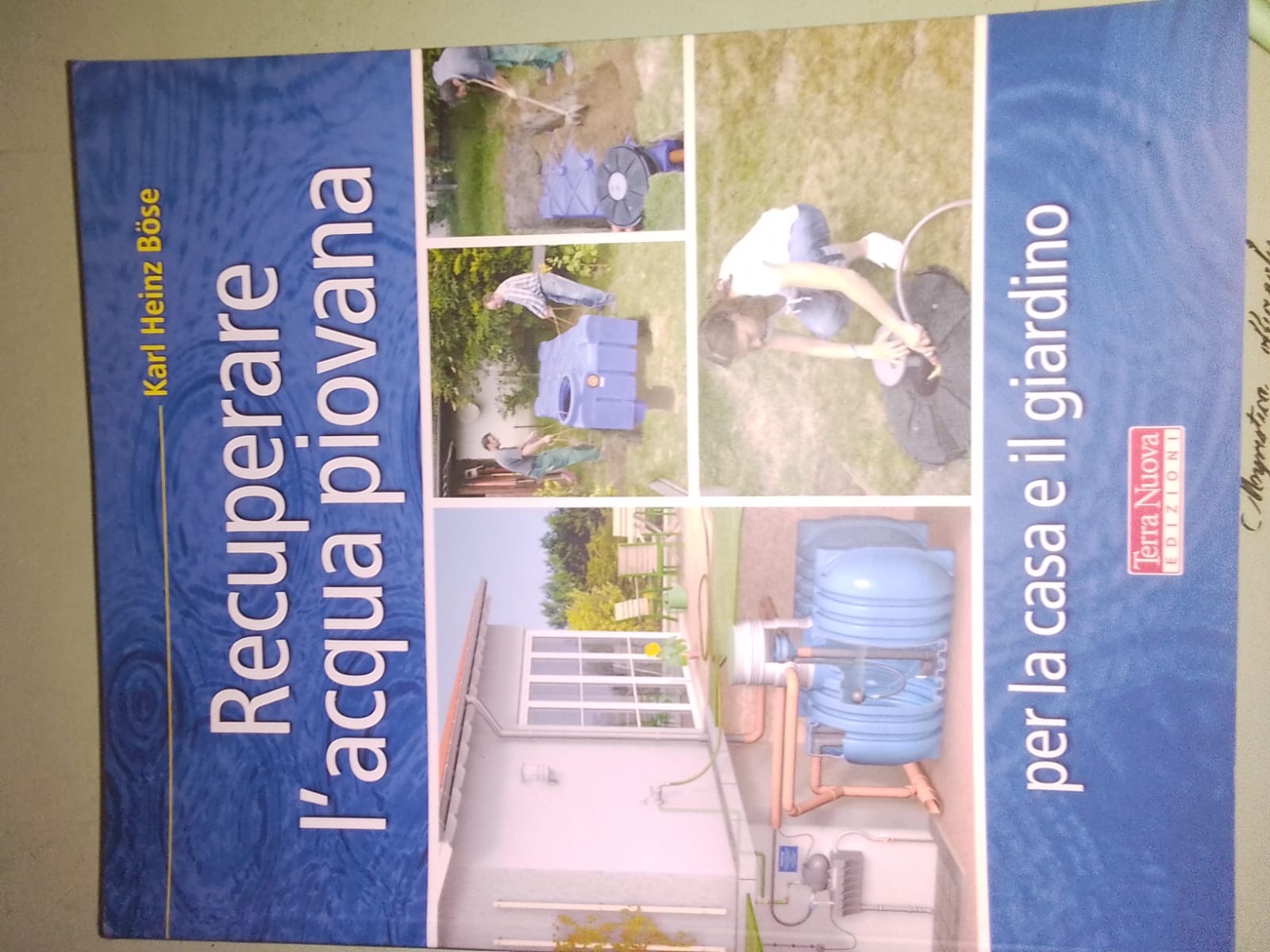
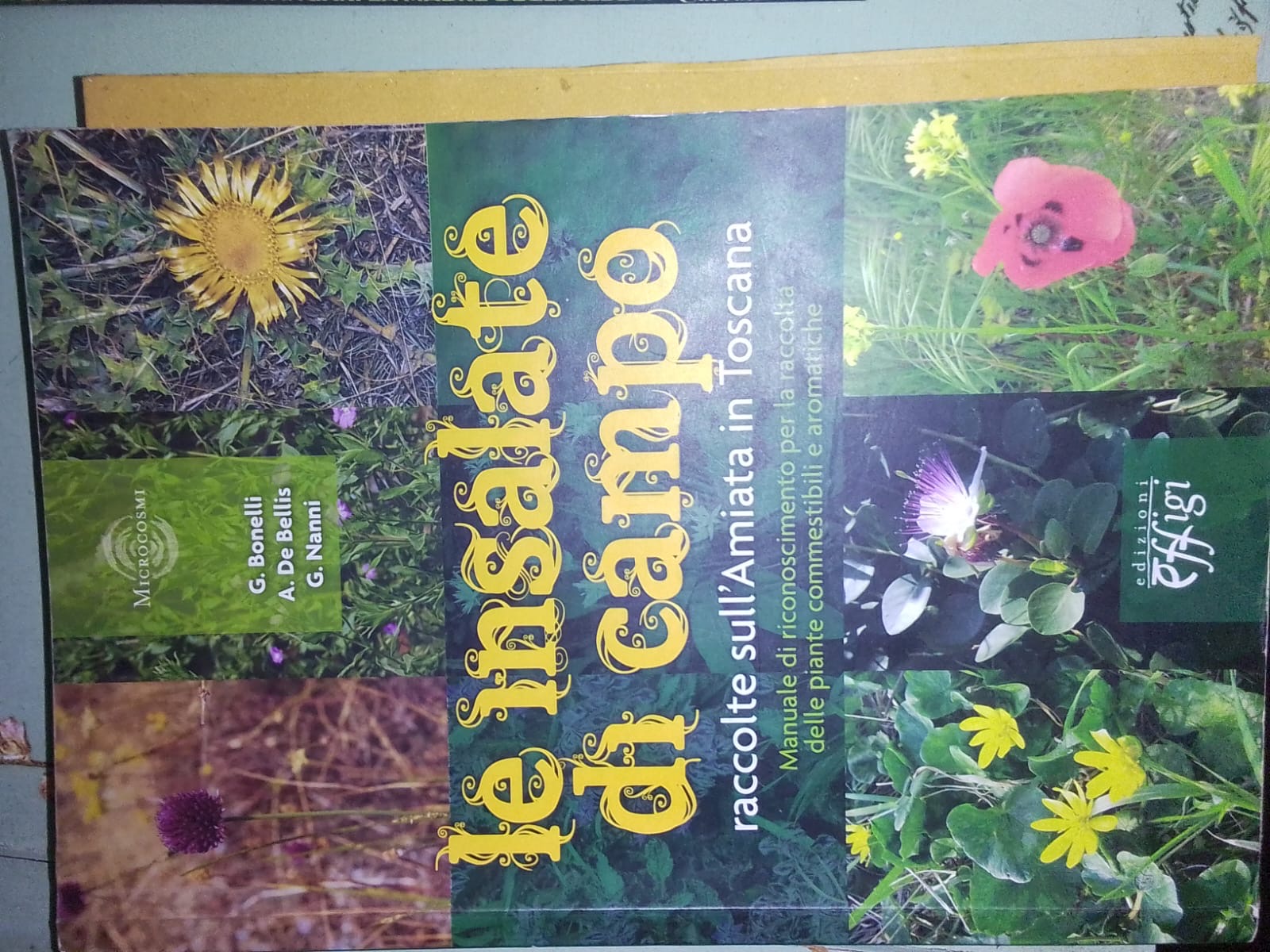
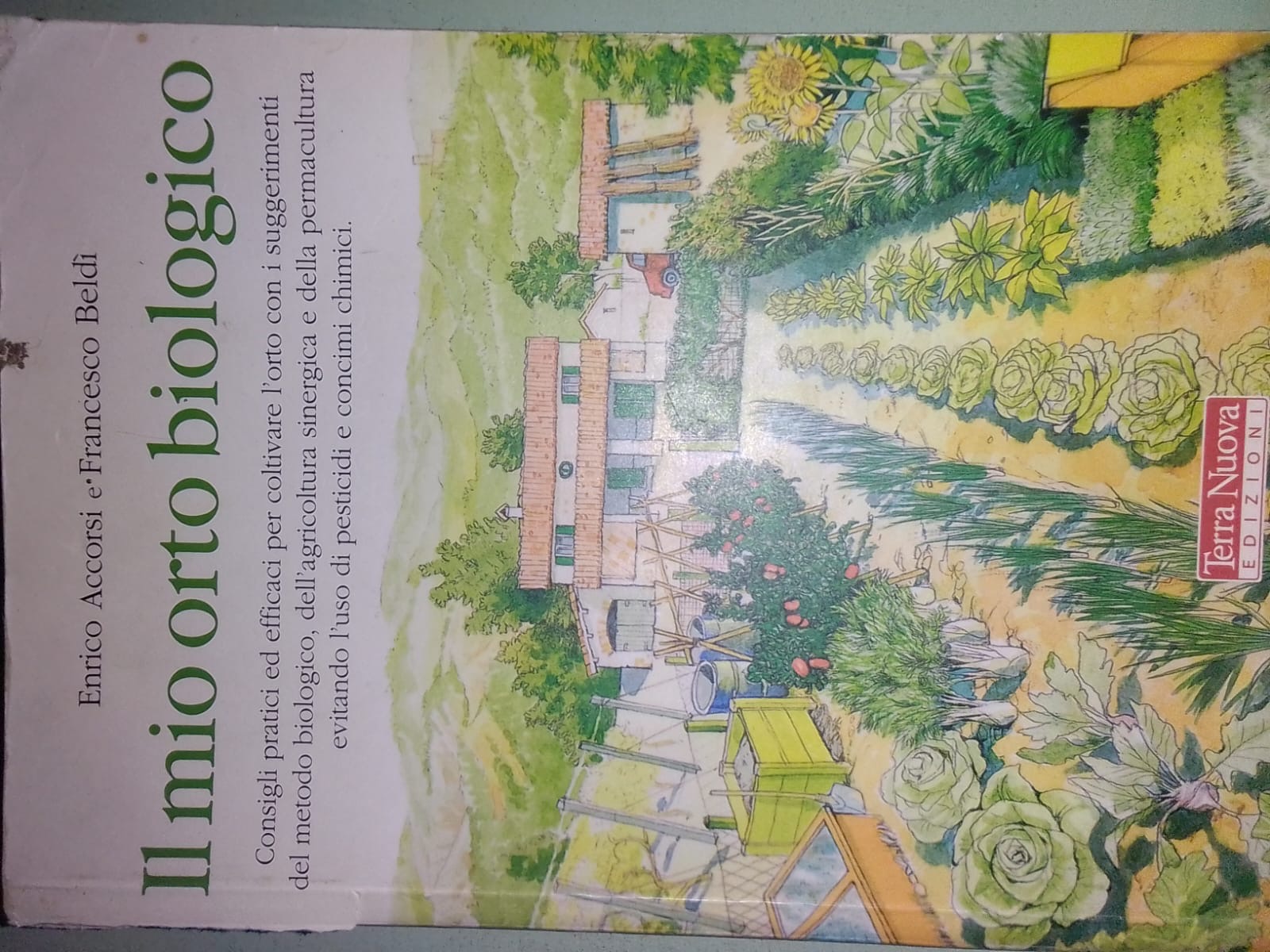
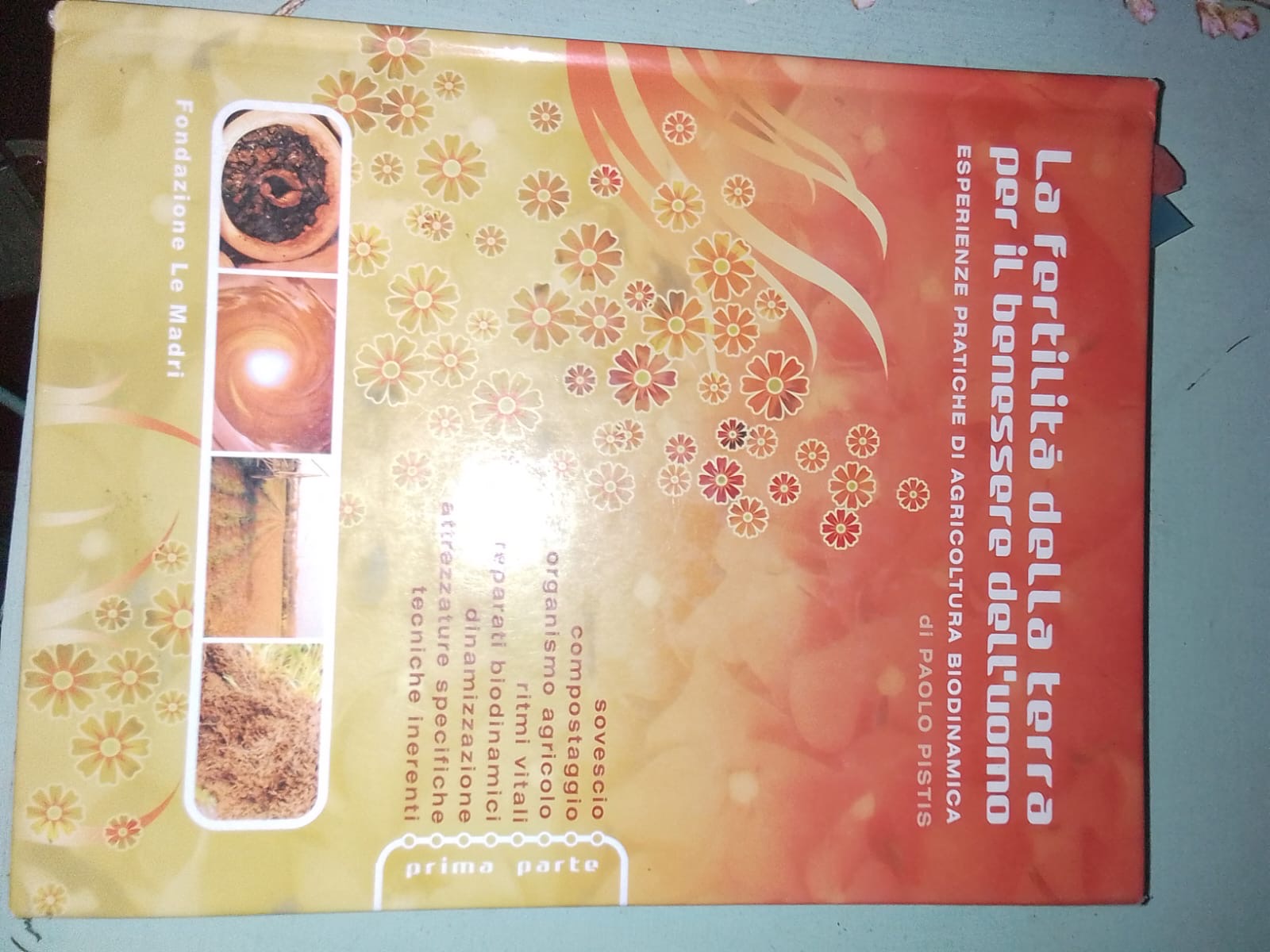
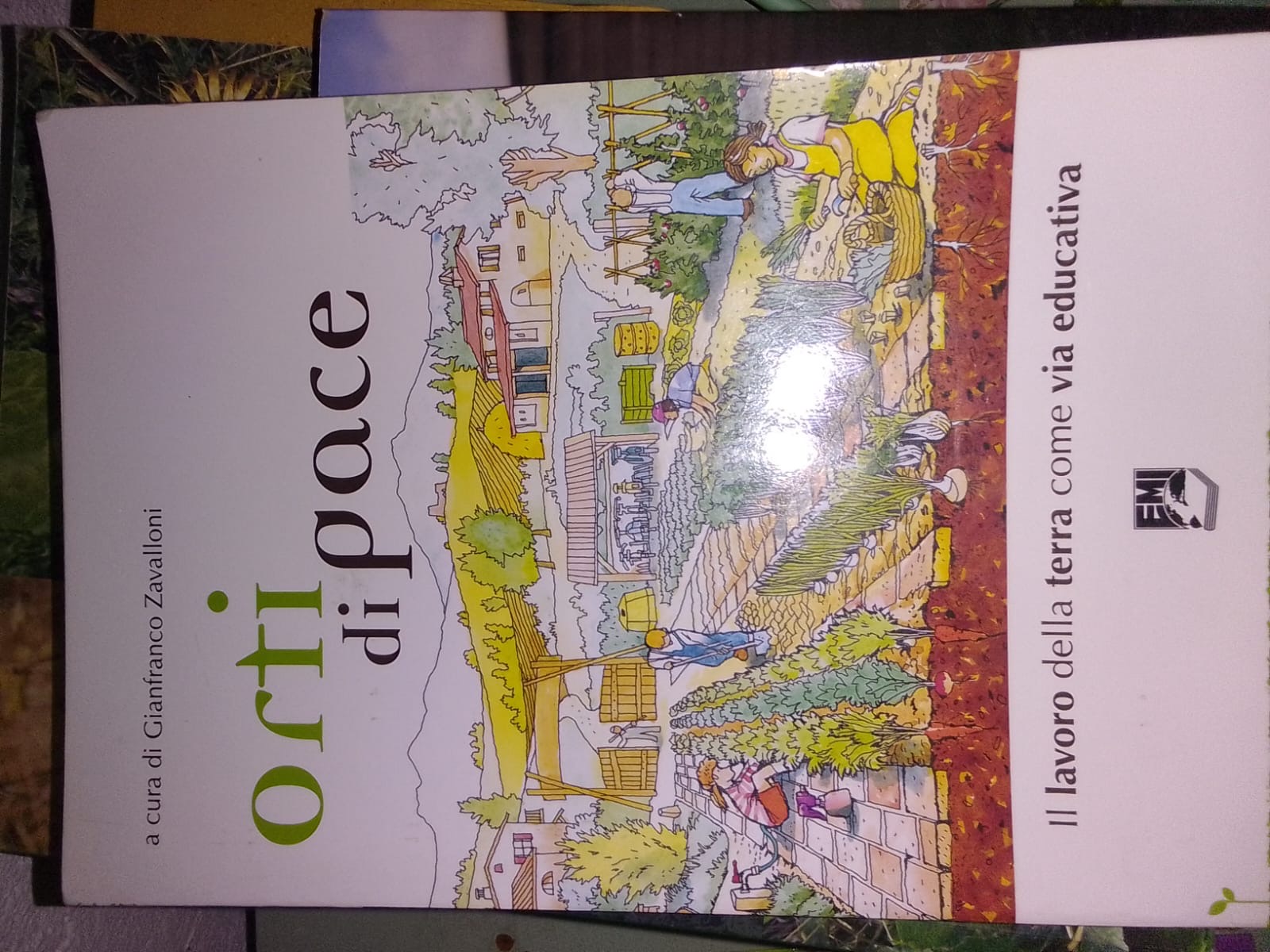
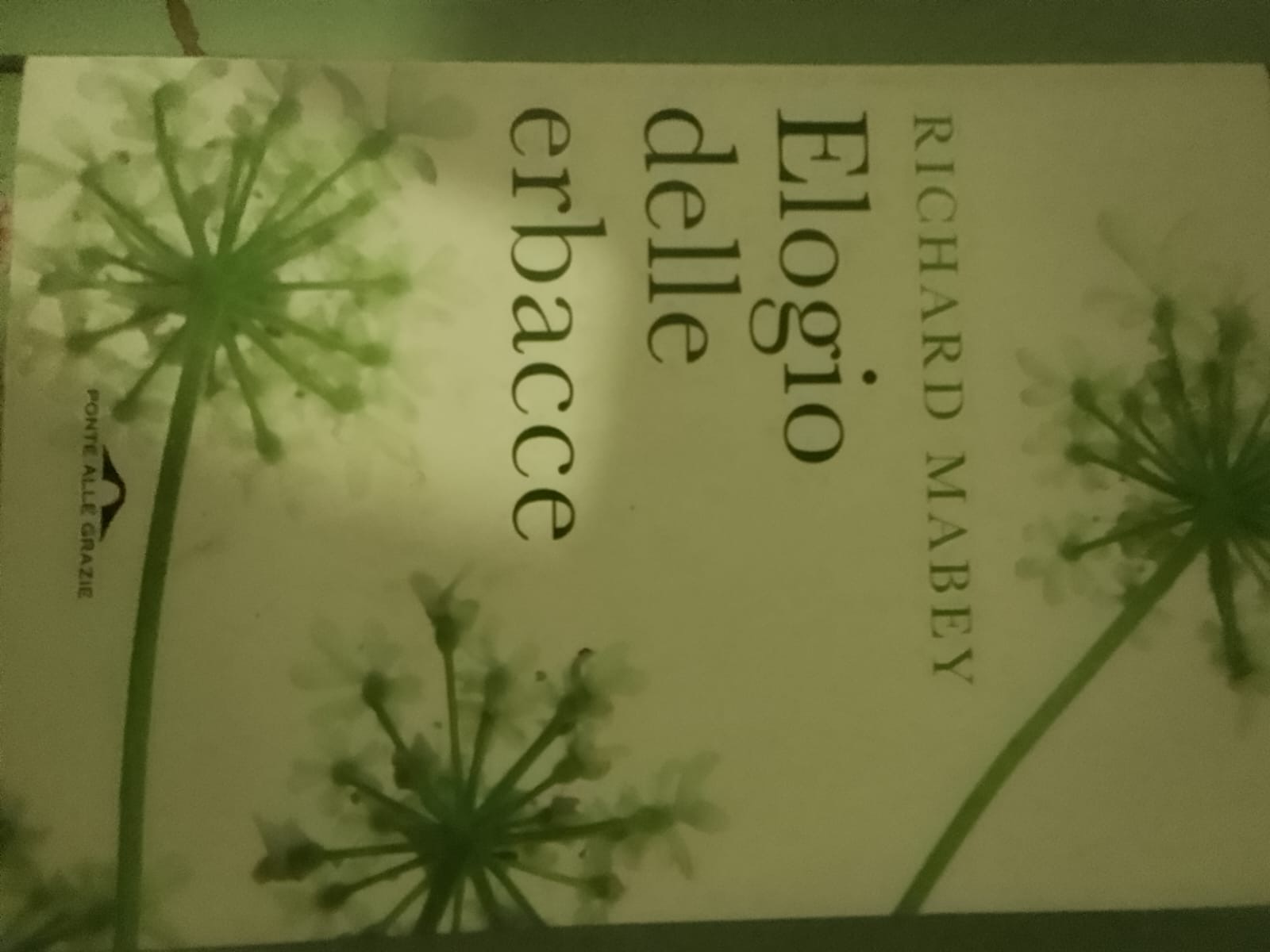
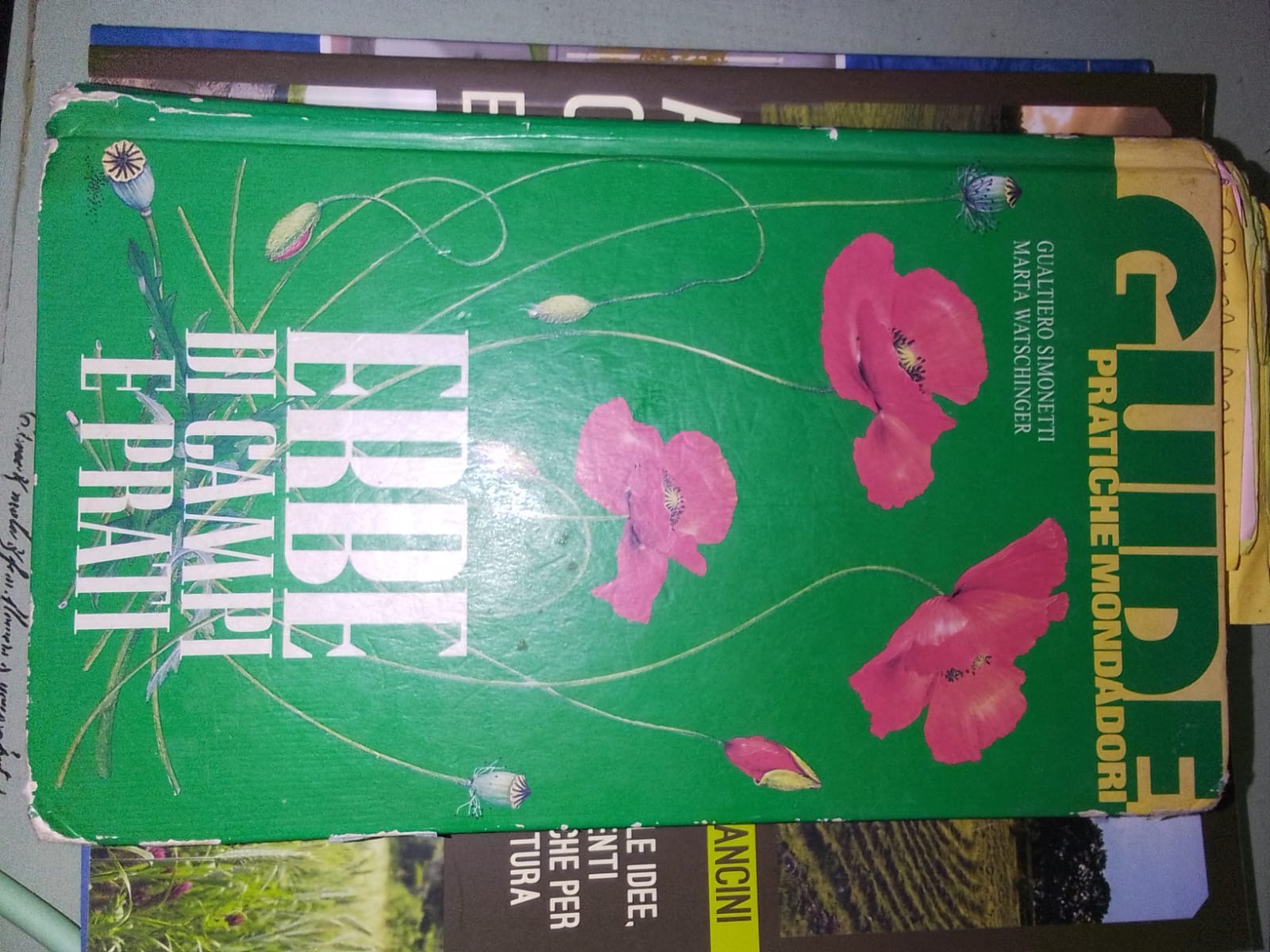
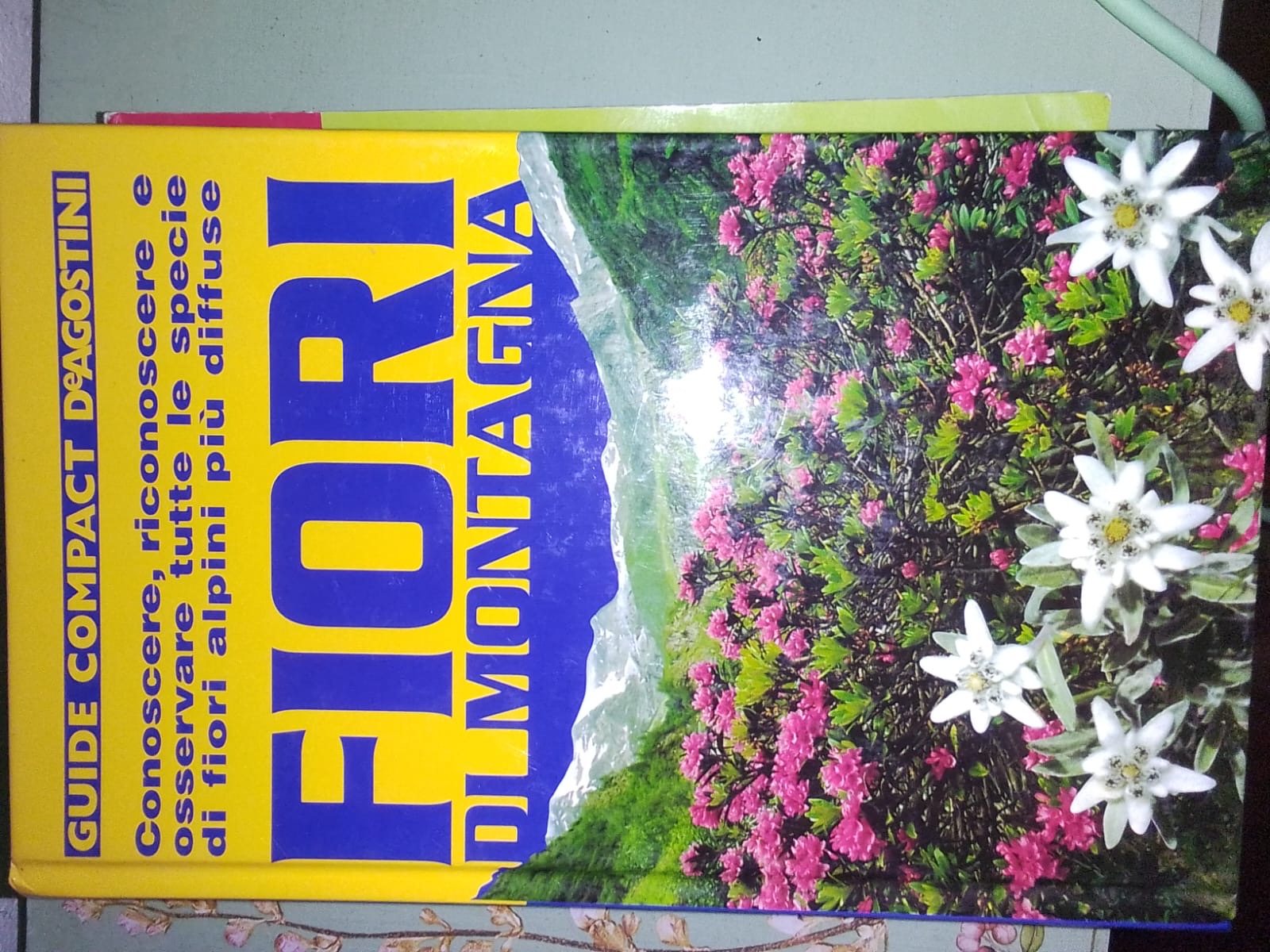
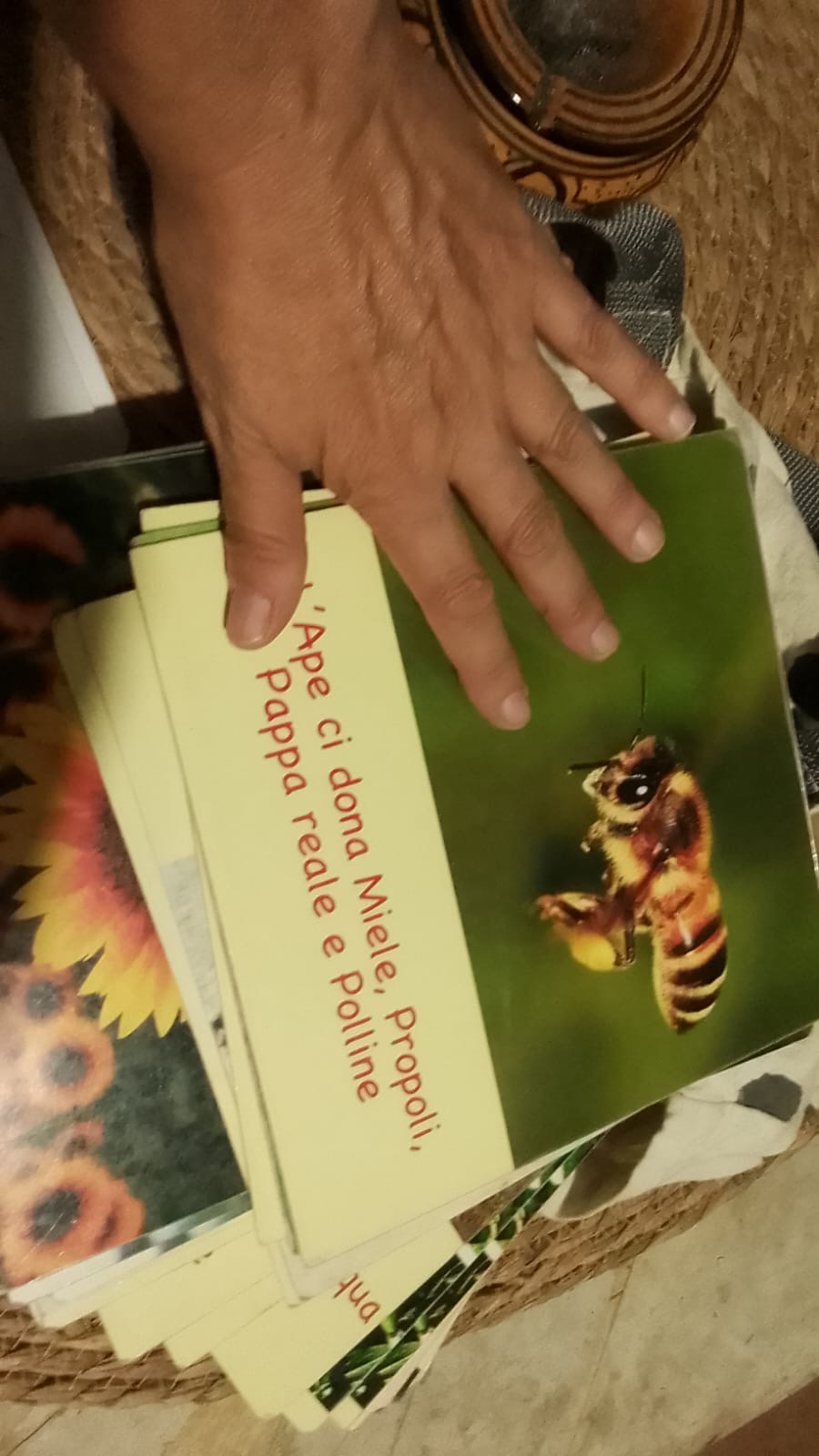
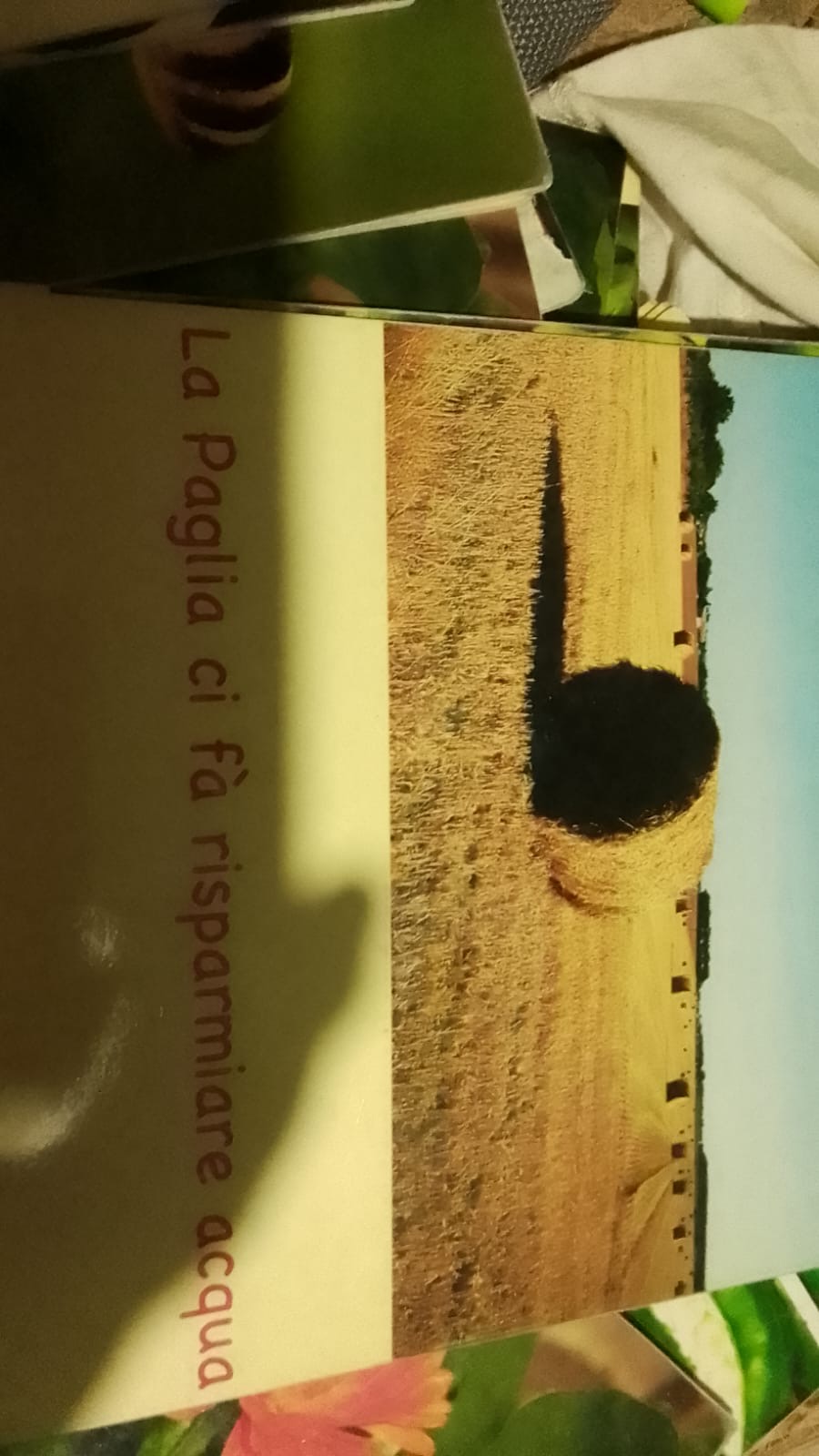
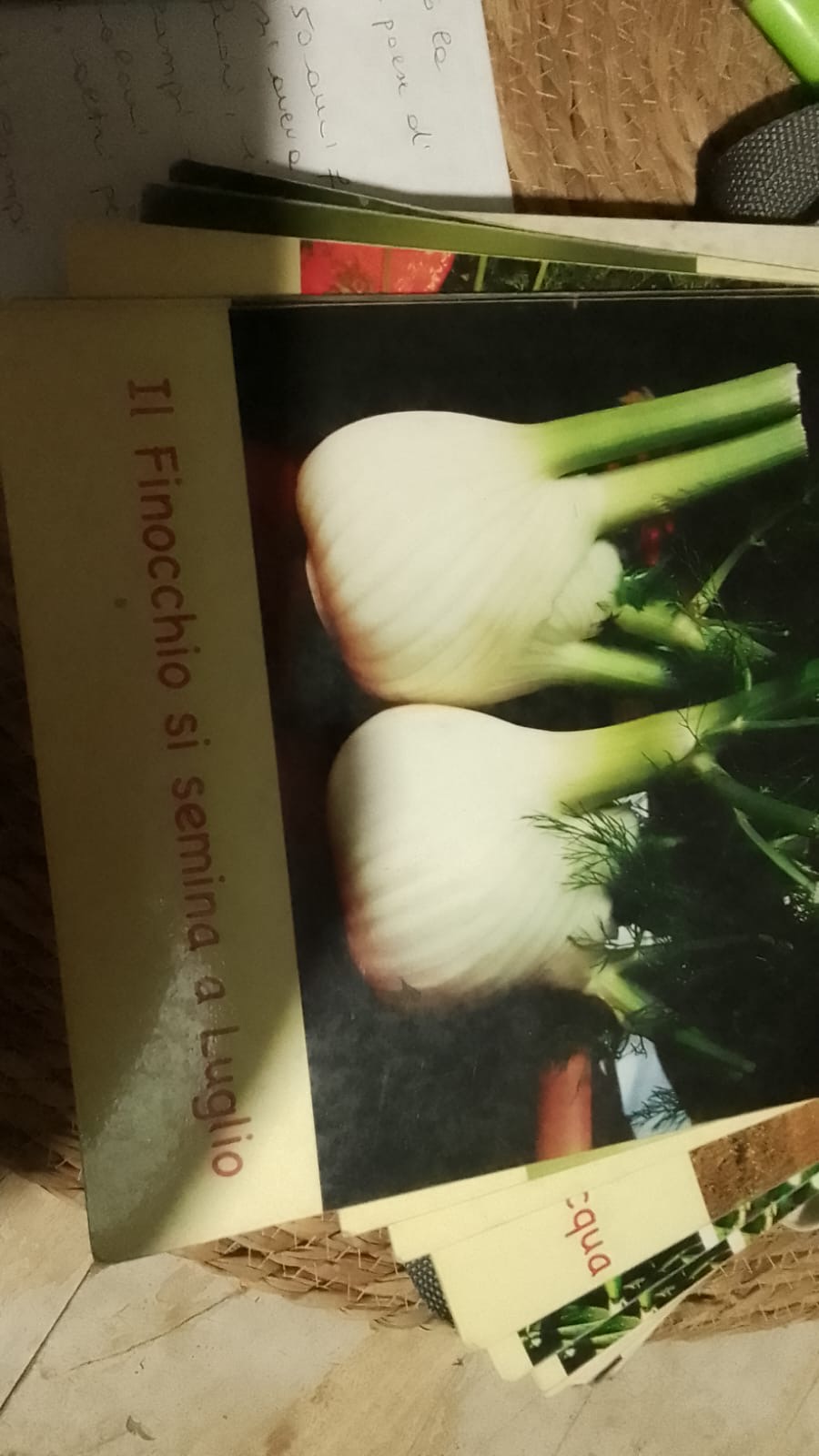
A deck of memory cards hand-drawn by la Formicola: playing cards for learning to recognize wild herbs and plants.
For information about the house, the walks or the workshops with la Formicola, write to us here or directly by email or phone.
The local farms and associations that work with la Formicola and Casa Selva to bring its workshops and experiences to life.
Saturday-night pizza.
Via Trecento 180, Lucardo – Montespertoli (FI)
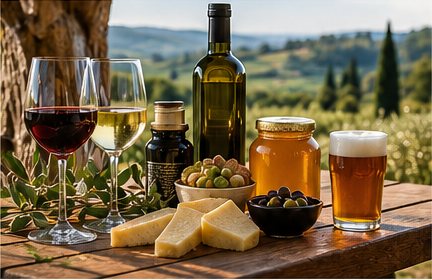
Wine, beer, olive oil and honey tastings.
Via Sant'Antonio a San Lorenzo 13/A, Montespertoli (FI)
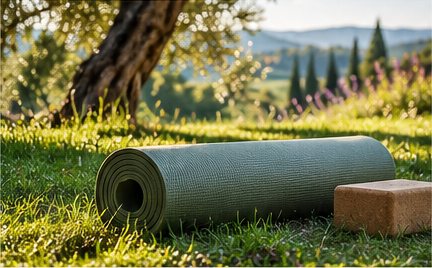
Yoga and well-being in nature.
Via Trecento 116, Montespertoli (FI)
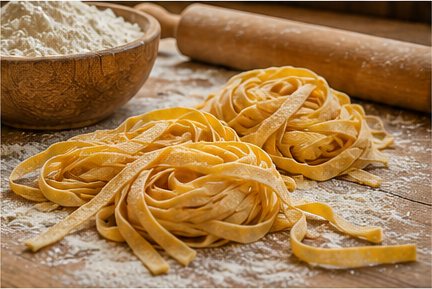
Cooking and convivial experiences.
Via Trecento 106, Montespertoli (FI)